On this page
Last updated: 2 October 2026.
Lift maintenance work is not only a technician visit. A lift AMC company has to manage building-wise assets, monthly maintenance schedules, breakdown complaints, call-back visits, safety observations, spare parts, technician reports, logbook entries, customer approvals, invoices, and renewal follow-up.
Lift maintenance software India
For the buyer intent "lift maintenance software India", Indian service businesses need a workflow that connects the customer request, assigned technician, job proof, payment or collection status, GST-ready handoff, and owner reporting. KaryaFlow is relevant when this intent is operational, not just informational: the team needs the same record to support dispatch, field updates, billing review, and follow-up.
That is difficult to run from WhatsApp groups and Excel once the team handles many societies, commercial buildings, hospitals, hotels, offices, and factories. The coordinator may know which technician went today, but the owner still needs cleaner answers: which lift is due for service, which call-back is repeated, which part was changed, which logbook was updated, which invoice is pending, and which AMC is at renewal risk.
Lift maintenance software in India should connect lift assets, AMC schedules, complaint tickets, technician job cards, service reports, parts usage, logbook evidence, payment status, and renewal reminders in one operating workflow.
For the broader recurring-service model, read our AMC management software guide. This article focuses only on lift and elevator maintenance teams.
Short answer
Lift maintenance software helps elevator service businesses manage AMC contracts, monthly maintenance visits, breakdown complaints, technician assignment, mobile service reports, logbook updates, spare parts, invoices, payments, and renewals.
For Indian lift service teams, the system should track the building, lift number, make, capacity, installation details, AMC period, visit frequency, technician checklist, fault history, safety observations, parts used, customer signature, and next due date.
The most useful system is not just a reminder calendar. It should show which lift is covered, which visit is due, which complaint repeated, which technician attended, what proof was captured, what part was used, whether the customer approved the work, and what the office must follow up next.
Lift rules and compliance duties in India are state-specific. Some states have lift or escalator laws and rules that refer to registration, maintenance, inspection, accident reporting, logbooks, and authorized maintenance agencies. Treat this article as software workflow guidance, not legal or engineering advice. Always verify requirements with the local lift inspectorate, electrical inspectorate, OEM, and qualified lift engineer for your state and contract.
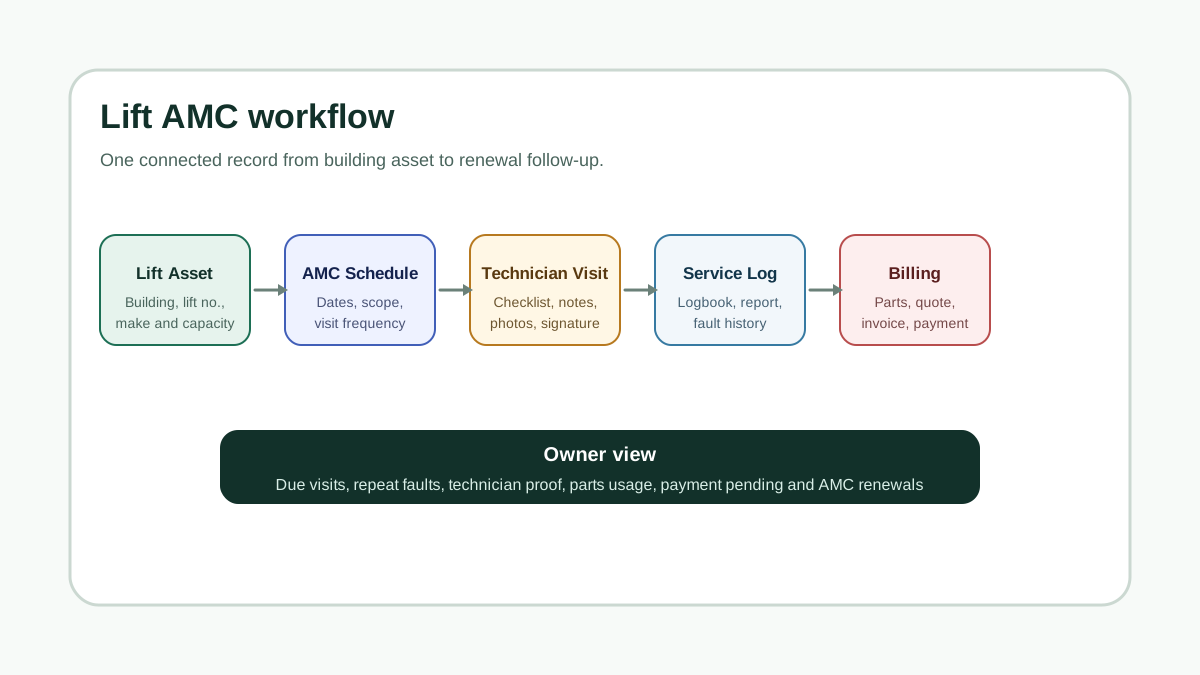 Lift AMC workflow from asset registration to maintenance log and renewal
A lift maintenance workflow should connect the lift asset, AMC schedule, technician visit, service log, parts, invoice, and renewal follow-up.
Lift AMC workflow from asset registration to maintenance log and renewal
A lift maintenance workflow should connect the lift asset, AMC schedule, technician visit, service log, parts, invoice, and renewal follow-up.
What is lift maintenance software?
Lift maintenance software is a field service system for companies that maintain elevators, escalators, moving walks, and related vertical transportation assets. It keeps the operational record for each building and lift so the service team can schedule maintenance, respond to faults, capture technician work, and report status without rebuilding the history from chat messages.
A good lift maintenance system should help manage:
- customer, building, and site records;
- lift number, make, model, capacity, floors served, and installation details;
- AMC contract start date, end date, visit frequency, and scope;
- monthly or periodic service visits;
- breakdown complaints and emergency call-outs;
- technician assignment and route visibility;
- mobile job cards with checklists, photos, readings, notes, and signatures;
- parts required, parts issued, parts used, and old-part return;
- service logbook or maintenance record evidence;
- invoice, payment, and renewal follow-up.
A basic CRM can store customer names. Accounting software can raise invoices. WhatsApp can help teams communicate. But lift AMC teams need a connected asset history. The owner, coordinator, technician, storekeeper, and accounts person should all see the same service trail.
For a broader software checklist, use the field service management software in India guide after reading this lift-specific page.
Why lift AMC teams outgrow WhatsApp and Excel
WhatsApp works when the team is small and every building is remembered by the owner. The problems appear when the AMC base grows.
First, building and lift details become inconsistent. One coordinator saves the lift as "Tower A lift 1." Another writes "A block passenger lift." The technician sends photos in a group, but the next coordinator cannot connect them to the correct asset.
Second, monthly service becomes hard to prove. A technician may say the lift was checked, but the office needs a clear visit record with date, checklist, observations, customer acknowledgement, and next action.
Third, breakdown history gets hidden. A lift may have repeated door issues, leveling complaints, rescue-device faults, vibration, noise, controller errors, or power-related stoppages. If every complaint is buried in WhatsApp, the business cannot see recurring problems.
Fourth, parts create leakage. A door lock, relay, sensor, guide shoe, contactor, button, fan, roller, belt, rope-related item, battery, or electrical component may be issued to a technician. The office should know whether it was installed, returned, billed, covered under AMC, or waiting for customer approval.
Finally, renewals become late. If the AMC expiry date is only in Excel, the renewal call often starts after the contract has already expired.
If your team is trying to replace chat-based dispatch, read how to track field technicians without WhatsApp groups. Lift maintenance needs that same discipline, but with stronger asset and logbook control.
The complete lift AMC workflow
A practical lift maintenance workflow should move from asset setup to renewal without losing context.
1. Create the building and lift asset record
Each building should have a customer or account record, site address, contact persons, access rules, billing details, and lift assets.
Each lift asset should store:
- lift number or internal name;
- building, tower, floor range, and location;
- make, model, capacity, and type;
- installation or handover date if available;
- controller, door, drive, rescue device, and major component notes where the business tracks them;
- warranty or AMC status;
- contract scope and visit frequency;
- previous complaint and maintenance history.
Do not track only the society name. The software should know which exact lift is being serviced.
2. Add the AMC contract
The AMC record should capture start date, end date, included visits, maintenance frequency, billing terms, included and excluded work, escalation contact, and renewal owner.
If the customer has multiple lifts, the AMC should clearly show whether all lifts are covered or only selected assets. That prevents confusion when a complaint comes from a different lift in the same building.
3. Generate periodic maintenance visits
The system should generate planned maintenance jobs based on the AMC schedule. For many elevator service teams, monthly maintenance is a standard operating rhythm, but the exact schedule depends on contract scope, state requirements, lift type, building usage, OEM recommendations, and engineering judgement.
The coordinator should see upcoming, due, overdue, completed, and skipped visits without maintaining a separate calendar.
4. Assign the technician
Lift technicians are not interchangeable for every job. Assignment should consider location, skill, workload, emergency priority, building access, and whether the job requires a senior technician.
For field visibility, use the technician tracking app India guide. In lift work, tracking should support dispatch and accountability, not become a separate GPS tool disconnected from the asset record.
5. Complete the mobile job card
The technician should open the assigned job on mobile and capture the visit details. A lift maintenance job card may include:
- arrival and completion time;
- lift asset and building details;
- maintenance checklist;
- fault observations;
- photos where useful;
- readings or component notes tracked by the business;
- parts required or used;
- customer or building representative signature;
- next action and escalation note.
For a broader field capture model, read the job card app for technicians guide. Lift job cards need the same proof-of-work foundation, but connected to lift asset history.
6. Update the service log and office status
After the job, the office should be able to see whether the visit is complete, whether the logbook was updated, whether any fault remains open, whether a quote is required, whether parts are pending, and whether the customer needs a formal service report.
Some state rules and customer contracts may require maintenance records, annual submissions, fitness certificates, or specific logbook handling. Use software to keep records organized, but confirm the exact legal or engineering format locally.
7. Handle parts, billing, and renewal
If a part is used, the job should update stock and billing context. If a paid repair is needed, the system should create a quote or invoice handoff. If the AMC is close to expiry, the visit should feed renewal follow-up.
This is where workflow software becomes useful: it keeps maintenance, complaints, parts, payment, and renewal connected instead of splitting them across teams.
What the lift service record should contain
A lift service record should sit at the asset level. The customer or building is important, but the actual history belongs to the lift.
At minimum, the record should include:
- building and site;
- lift number or asset ID;
- make, model, capacity, and floors served;
- installation, handover, or registration reference if tracked;
- AMC period and visit frequency;
- maintenance visit history;
- breakdown and call-back history;
- technician notes and photos;
- parts issued, installed, returned, or pending;
- service report and logbook evidence;
- customer approval or signature;
- invoice, payment, and renewal status.
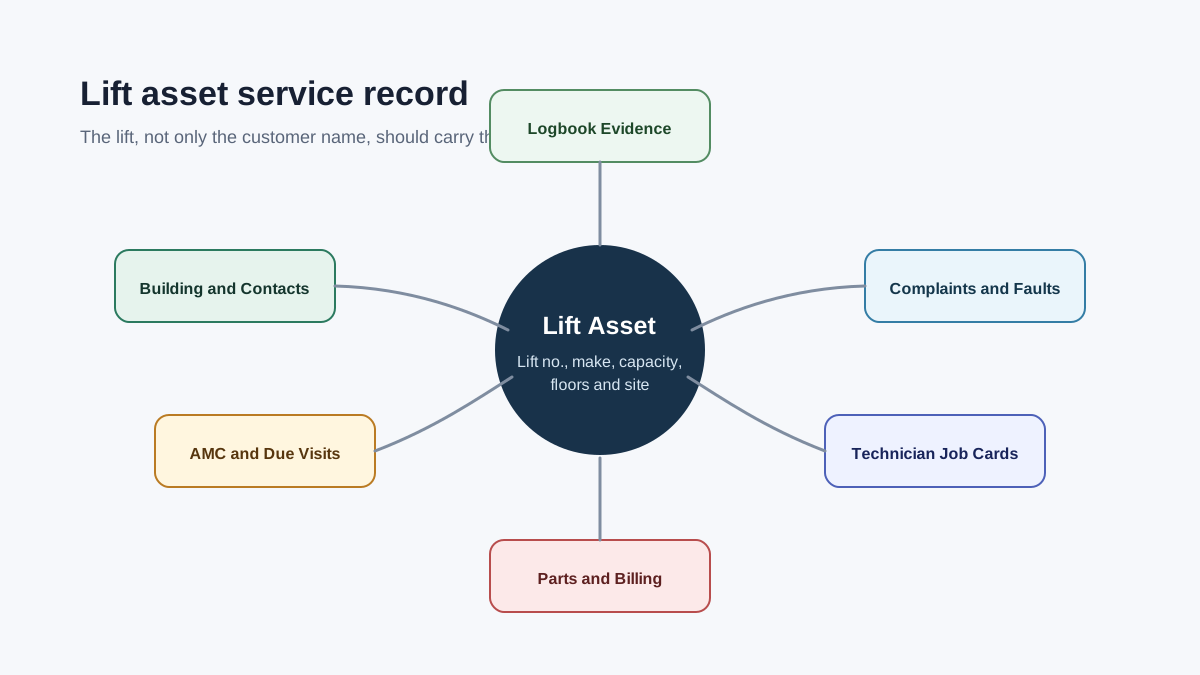 Lift asset service record model for elevator AMC companies
Lift service history works best when building, lift asset, AMC, complaint, technician, logbook, parts, and billing records stay connected.
Lift asset service record model for elevator AMC companies
Lift service history works best when building, lift asset, AMC, complaint, technician, logbook, parts, and billing records stay connected.
When this record is clean, the coordinator can answer building questions quickly. The owner can see which lifts need attention. The technician can understand past faults before reaching the site.
Monthly maintenance, breakdown, and call-back jobs are different
A lift AMC business should not treat every job as the same "service done" status.
Periodic maintenance visit
This is the planned visit under the AMC. It should capture checklist completion, observations, technician notes, customer acknowledgement, and any recommended action.
Breakdown complaint
This starts when the customer reports a stopped lift, abnormal noise, door issue, leveling issue, indicator issue, power-related fault, rescue-device concern, or any other operational problem. It may require urgent assignment, diagnosis, parts, escalation, and follow-up.
Call-back or repeat complaint
A repeat complaint should be linked to the previous job. That helps the owner see whether the earlier repair was incomplete, whether a part failed again, or whether the issue needs deeper investigation.
Part replacement or quote visit
Some jobs need a formal quote, customer approval, part issue, technician visit, old-part return, and invoice. This should not be hidden inside the monthly maintenance record.
For stock movement, read the stock issue register for service calls and technician assigned parts custody software guides.
Logbook, fitness certificate, and compliance record support
Several Indian lift workflows involve records beyond a normal service note. Depending on state, building type, customer contract, OEM process, and local authority, the team may need registration documents, maintenance logs, inspection records, accident reporting, authorized agency details, or fitness-related documentation.
For example, the Uttar Pradesh Lifts and Escalators Act, 2024 includes provisions related to registration, maintenance, safety, codes, duration of registration, registration of agencies involved in AMC, and accident reporting. Delhi's lift regulation page describes construction, maintenance, safe working, licensing, testing, and enforcement machinery under the applicable Act in the NCT context. BIS also lists lift standards including a maintenance guide under the IS 17900 series.
The software should not replace legal compliance or engineering inspection. It should help the service company keep the working records easy to find:
- AMC copy and dates;
- maintenance visit entries;
- technician attendance and signature;
- service report;
- fault history;
- parts replacement record;
- customer acknowledgement;
- inspection or authority reference where applicable;
- accident or incident escalation record if the business is responsible for capturing it.
This record discipline improves trust during customer reviews and reduces the chance that a required document is missing when the building asks for it.
Billing and payment handoff
Lift AMC billing can include annual AMC fees, monthly billing, paid breakdown repairs, modernization work, spare parts, emergency visits, and inspection support charges. The field service system should make the billing handoff clear.
The office should know:
- whether the job is included in AMC;
- whether a part is chargeable;
- whether customer approval is pending;
- whether GST invoice details are required;
- whether payment was collected at site;
- whether payment is pending from the society, facility team, or commercial account.
For invoice workflow, see GST invoicing software for service businesses. For field collections, use collect payment at the job site.
What owners, coordinators, and technicians should see
Owner
The owner needs active AMCs, expiring AMCs, overdue visits, repeat complaints, payment pending, technician productivity, parts usage, and buildings with high fault frequency.
Coordinator
The coordinator needs today's due visits, new breakdowns, technician availability, access contacts, lift asset details, open quotes, part requirements, and pending customer approvals.
Technician
The technician needs assigned jobs, building location, lift asset details, previous complaint history, checklist, part notes, photo upload, customer signature, and next-action fields.
Storekeeper
The storekeeper needs parts issued to technicians, parts used in jobs, parts returned, pending purchases, and chargeable or covered classification.
For teams with multiple branches or service zones, read multi-site field workforce management software.
KaryaFlow fit for lift maintenance teams
KaryaFlow fits lift maintenance businesses that want one workflow for AMC scheduling, complaint tickets, technician assignment, mobile job cards, lift service records, parts tracking, payment visibility, and renewal follow-up.
The practical operating model is:
Lift asset -> AMC schedule -> Technician job card -> Service log -> Parts and billing -> Renewal
That model helps the team stop treating maintenance as disconnected calls and messages. Each visit updates the lift history, the customer account, the technician record, the parts record, and the renewal pipeline.
If you are comparing options, review KaryaFlow pricing after mapping your actual lift AMC workflow.
Demo checklist for lift maintenance software
Ask a software vendor to show a real lift maintenance workflow, not only a dashboard.
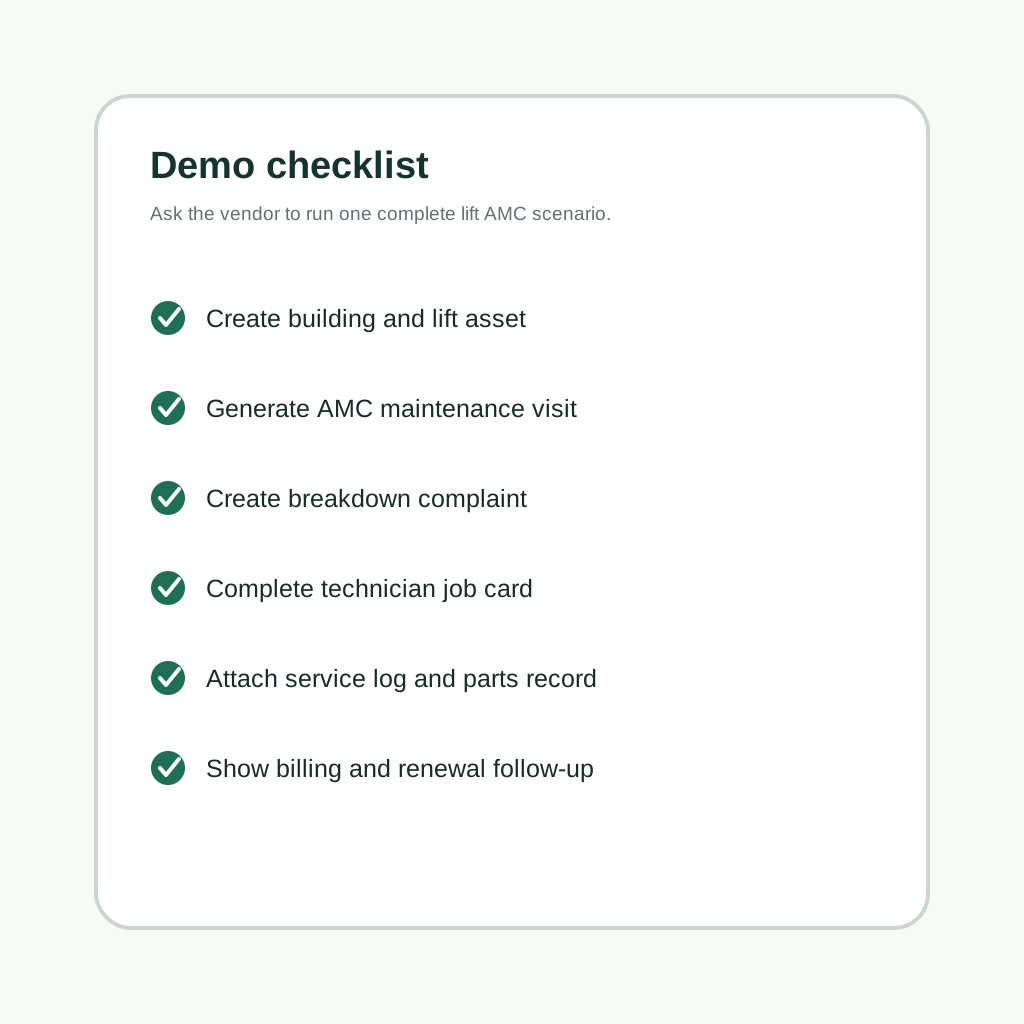 Lift maintenance software demo checklist for elevator AMC teams
Evaluate lift maintenance software by walking through one monthly visit, one breakdown, one part replacement, and one renewal.
Lift maintenance software demo checklist for elevator AMC teams
Evaluate lift maintenance software by walking through one monthly visit, one breakdown, one part replacement, and one renewal.
Use this demo path:
- Create a building with two lift assets.
- Add AMC dates, scope, visit frequency, and billing terms.
- Generate a planned maintenance visit.
- Create one breakdown complaint linked to one lift asset.
- Assign a technician based on location and workload.
- Complete the mobile job card with checklist, photos, notes, and signature.
- Record a part requirement, issue the part, and mark it used or returned.
- Create a service report or logbook evidence record.
- Mark the job as AMC-covered, chargeable, or approval pending.
- Show owner reports for overdue visits, repeat complaints, parts usage, pending invoices, and AMC renewals.
If the demo cannot complete this loop, the product may be a task tracker, not a lift maintenance operating system.
FAQ
What is lift maintenance software?
Lift maintenance software is a system for managing elevator AMC contracts, scheduled maintenance visits, breakdown complaints, technician job cards, service reports, parts usage, logbook evidence, invoices, payments, and renewal follow-up.
Is lift maintenance software different from general AMC software?
Yes. General AMC software manages contracts and due dates. Lift maintenance software needs stronger asset history, building-wise lift records, technician checklists, fault history, service logs, call-back tracking, and parts replacement workflows.
Can lift maintenance software track monthly service visits?
Yes. A practical system should generate planned visits, assign technicians, capture mobile job cards, update service logs, show missed or overdue visits, and connect the visit to the lift asset and AMC contract.
Can the software replace a legal lift logbook or inspection record?
No. Software can help organize maintenance records and service evidence, but legal formats and inspection requirements depend on the state, local authority, building type, and applicable rules. Verify the exact requirement locally.
What should a lift technician capture in a mobile job card?
The technician should capture the building, lift asset, visit type, checklist, fault observations, photos where useful, parts required or used, customer acknowledgement, signature, and next action.
How should lift AMC companies track breakdown complaints?
Breakdown complaints should be created as jobs linked to the correct lift asset and AMC contract. The record should show complaint time, technician assignment, diagnosis, parts, closure note, customer approval, and whether the issue repeated.
Can lift maintenance software track spare parts?
Yes. It should track parts requested, issued to technicians, used in jobs, returned unused, pending purchase, chargeable, AMC-covered, or waiting for customer approval.
When should a lift AMC business move from Excel to software?
Move when the team cannot reliably track due visits, breakdowns, repeat complaints, technician proof, parts usage, billing, and renewals from one place. For most growing AMC teams, that point comes before the owner feels fully ready.
Ready to modernize your service operations?
See how KaryaFlow can connect complaints, technician jobs, proof, parts, payments, and billing handoff for your service team.
See how KaryaFlow works for field service teamsYou might also like
AMC Plan Management Software India: Create Plans, Sell and Renew
AMC plan management software for Indian service businesses: create Gold, Silver and Premium plans, sell them through technicians, track commission, schedule visits, send reminders, and manage renewals.
Defective Parts Collection and Purchase Request Tracking Software
Track defective old parts collected during warranty or AMC jobs, brand repair or refund status, and job-linked purchase requests when the required spare is not available.
Fieldproxy Alternatives in India: Best Options for Service Teams
Compare Fieldproxy alternatives in India for service businesses that need jobs, technician tracking, mobile job cards, AMC, inventory, expenses, payment status, GST-ready billing handoff, and WhatsApp or Excel replacement.