On this page
Last updated: 23 September 2026.
ServiceCRM is a serious India-focused field service and after-sales service CRM option. Its public pages position the product around field service management, service agreements, AMC management, inventory, service reminders, job management, EMI management, field engineer management, SMS and email integration, dashboards, customer apps, admin and field engineer apps, photos, signatures, field engineer tracking, offline work, quotation, onsite invoicing, and app-based payments.
That makes ServiceCRM relevant for Indian businesses that talk about service CRM, after-sales support, warranty, AMC, customer app visibility, and service-industry workflows.
But many buyers searching for ServiceCRM alternatives are not only looking for another CRM. They are trying to fix a daily operating problem:
Jobs are still assigned through WhatsApp, technicians are tracked through calls, attendance is manual, job cards are incomplete, parts are not connected to billing, and owners do not have one clean view of open jobs, payments, stock, expenses, and follow-ups.
This article compares practical ServiceCRM alternatives in India, including KaryaFlow, Zoho FSM, FieldEZ, Zapium, Fieldproxy, and Zuper. It is written for HVAC and AC service centers, appliance repair teams, RO service companies, pest control businesses, electrical and plumbing service teams, elevator AMC providers, CCTV installers, fire safety teams, solar service teams, facility maintenance providers, and authorized service centers.
For the direct two-vendor comparison, read KaryaFlow vs ServiceCRM. For the broader category list, read Best Field Service Management Software in India. For adjacent comparison pages, read Zoho FSM alternatives in India, FieldEZ alternatives in India, Zapium alternatives in India, Fieldproxy alternatives in India, and KaryaFlow vs Zuper.
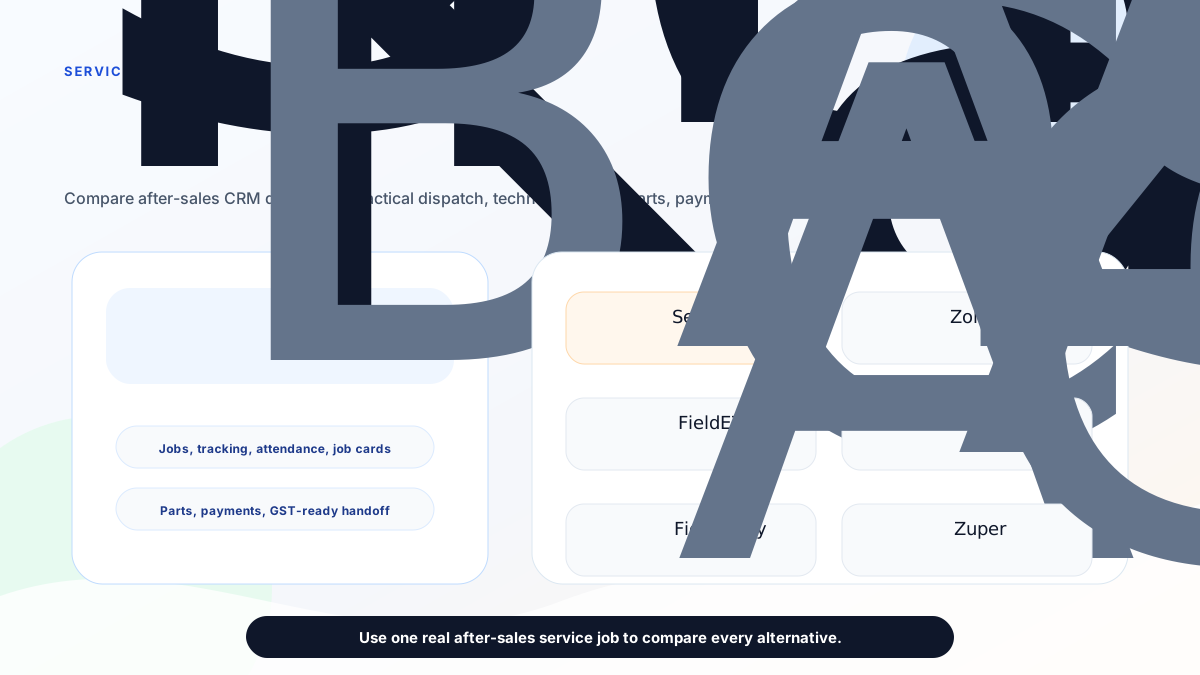 ServiceCRM alternatives in India workflow comparison with KaryaFlow, Zoho FSM, FieldEZ, Zapium, Fieldproxy, and Zuper
The best ServiceCRM alternative depends on whether your bottleneck is daily field execution, after-sales CRM, Zoho ecosystem depth, enterprise field operations, maintenance depth, or configurable global FSM.
ServiceCRM alternatives in India workflow comparison with KaryaFlow, Zoho FSM, FieldEZ, Zapium, Fieldproxy, and Zuper
The best ServiceCRM alternative depends on whether your bottleneck is daily field execution, after-sales CRM, Zoho ecosystem depth, enterprise field operations, maintenance depth, or configurable global FSM.
Short answer
KaryaFlow is the best first ServiceCRM alternative for Indian service businesses that want focused field execution instead of a broader after-sales CRM rollout. It is strongest when the team needs job dispatch, technician tracking, geofence attendance, mobile job cards, photos, notes, parts, AMC follow-up, expenses, GST-ready billing handoff, payment visibility, and owner dashboards.
Stay with ServiceCRM or keep it high on the shortlist if your buying language is after-sales service CRM, customer app, service agreements, warranty, AMC, EMI, white-label mobile apps, service reminders, onsite quotations, onsite invoicing, and a broad set of industry templates.
Evaluate Zoho FSM if your business already uses Zoho CRM, Zoho Books, Zoho Desk, Bigin, Zoho Inventory, or Zoho One.
Evaluate FieldEZ if configurable field operations, assets, SLA, roster, workflow automation, expense tracking, and broader enterprise field controls are central.
Evaluate Zapium if preventive maintenance, asset management, checklists, contracts, QR codes, inventory, and multi-site maintenance are the real operating problem.
Evaluate Fieldproxy or Zuper if the buyer wants AI-led configuration, deeper platform setup, global FSM depth, integrations, and a larger implementation conversation.
What is ServiceCRM used for?
ServiceCRM is used by service businesses that want to manage after-sales service operations, customer requests, service agreements, AMC, warranty, job scheduling, field engineer tracking, inventory, quotations, invoices, payments, reminders, and customer-facing service workflows in one system.
Its official pages describe field service management software for small and medium service businesses. The public pricing page lists Simple, Modern, and Advanced package names and asks buyers to call for the best package according to requirement. The listed package capabilities include service contract, AMC management, inventory, reminders, job management, EMI management, field engineer management, reports, SMS and email integration, dashboard stats, iPhone and Android apps, white-labeled apps, separate client app, separate admin and field engineer apps, offsite photos, customer signature, field engineer map tracking, offline work, onsite quotation, onsite invoice, app payment, and unlimited users or field engineers.
That is a wide after-sales and field service feature surface. The question is not whether ServiceCRM has useful capabilities. The question is whether that product shape matches the buyer's immediate workflow problem.
Why buyers look for ServiceCRM alternatives
Indian service businesses usually look for ServiceCRM alternatives for six practical reasons.
First, the buyer may want a cleaner field execution system before committing to a broader service CRM. If the team is still operating through WhatsApp, Excel, phone calls, paper job cards, and manual attendance, adoption matters more than module breadth.
Second, the buyer may want a straight INR number early. KaryaFlow publishes its plan prices: INR 990 per month for up to 10 users, INR 2,673 per month for up to 30 users, and a written quote above 30 users. ServiceCRM's pricing page shows package names and capabilities, but asks buyers to call for the best package according to requirement. Owner-led teams usually want to see the number before booking demos.
Third, the buyer may not need white-label mobile apps, separate customer apps, EMI management, or the full after-sales CRM surface immediately. Many service centers first need job assignment, technician proof, attendance, parts, payment status, and invoice handoff.
Fourth, the buyer may need GST-ready field-to-office handoff more than a generic invoice screen. For Indian service teams, accurate billing starts with the technician job card: parts, labour, warranty or AMC status, photos, customer approval, and payment status.
Fifth, the business may want a product that feels simpler for dispatchers and technicians. Service software fails when field staff avoid the mobile app. A narrower workflow can be easier to roll out.
Sixth, the buyer may be comparing categories, not just vendors. "Service CRM", "after-sales service software", "field service management software", "technician tracking app", "AMC management software", and "service center management software" can overlap, but they are not always the same purchase.
How to choose a ServiceCRM alternative
Use the operating problem first. Do not compare only feature lists.
If the question is, "How do we manage after-sales service with customer app visibility, service agreements, warranty, AMC reminders, EMI management, and white-label app options?" ServiceCRM may stay the strongest benchmark.
If the question is, "How do we stop running jobs through WhatsApp and Excel?" KaryaFlow should be evaluated first.
If the question is, "How do we connect field service into Zoho CRM and Zoho Books?" Zoho FSM deserves a serious demo.
If the question is, "How do we standardize a distributed field force with configurable work orders, SLA, roster, assets, warranty, expenses, and analytics?" FieldEZ may fit.
If the question is, "How do we manage preventive maintenance, assets, checklists, contracts, QR codes, and multi-site service operations?" Zapium may be closer to the real need.
If the question is, "How do we configure a broader FSM platform with AI-led workflows, APIs, and integrations?" Fieldproxy and Zuper may belong on the shortlist.
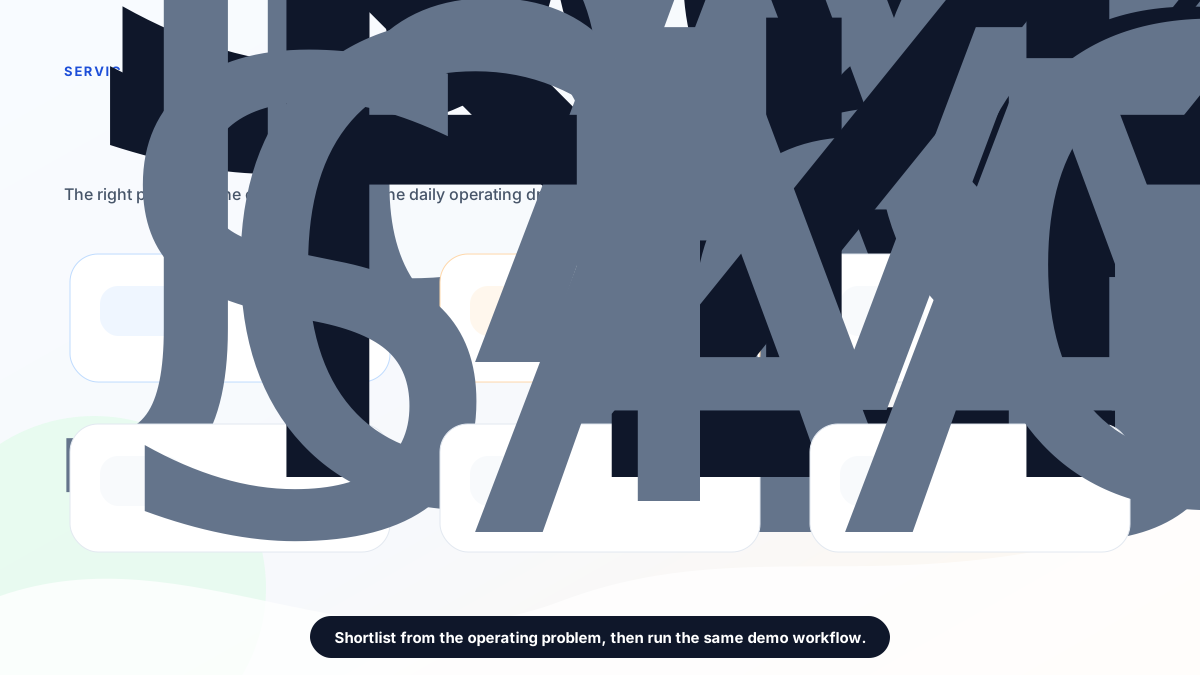 Decision map for choosing a ServiceCRM alternative in India
A stronger shortlist starts with the bottleneck: daily field execution, after-sales CRM, Zoho ecosystem depth, configurable operations, maintenance depth, or global FSM platform depth.
Decision map for choosing a ServiceCRM alternative in India
A stronger shortlist starts with the bottleneck: daily field execution, after-sales CRM, Zoho ecosystem depth, configurable operations, maintenance depth, or global FSM platform depth.
KaryaFlow: best first ServiceCRM alternative for field execution
KaryaFlow is the best first ServiceCRM alternative when the buyer wants practical field service execution for Indian teams.
KaryaFlow is built around the daily service lifecycle:
- customer request or complaint;
- job creation;
- technician assignment;
- live technician visibility;
- geofence attendance;
- mobile job card completion;
- photos, notes, parts, labour, and signature;
- AMC or warranty decision;
- expense and payment visibility;
- GST-ready billing handoff;
- owner dashboard.
This makes KaryaFlow a strong fit for HVAC and AC service centers, appliance repair teams, RO service companies, pest control businesses, facility maintenance teams, authorized service centers, electrical and plumbing service teams, elevator AMC providers, CCTV installers, fire safety teams, solar service teams, and similar field service businesses.
KaryaFlow is not trying to replace every ServiceCRM capability. ServiceCRM has a broader public feature surface around after-sales CRM, white-label apps, customer app visibility, EMI management, service agreements, onsite quotation, and onsite invoice workflows. KaryaFlow's advantage is focus: getting jobs, technicians, attendance, job cards, parts, billing handoff, payments, and owner visibility into one practical workflow.
If spare parts are a major comparison point, test the full stock trail rather than only the inventory menu. The spare parts inventory management software guide shows what to check: godown stock, technician stock, barcode scan, job-card usage, unused returns, defective returns, and billing handoff.
For the direct comparison, read KaryaFlow vs ServiceCRM.
As checked on September 24, 2026, KaryaFlow pricing is published: Starter at INR 990 per month for up to 10 users and Growth at INR 2,673 per month for up to 30 users, prepaid with 18% GST shown separately, and a written Enterprise quote above 30 users. Every plan includes every module, and live GPS tracking is an add-on for the technicians who need it, priced in your quote. Buyers should still confirm user count, final invoice, billing cycle, activation, support, and any partner involvement before payment.
If your biggest pain is field execution, start with KaryaFlow. If your biggest pain is after-sales CRM breadth, keep ServiceCRM in the evaluation.
For related workflows, read technician tracking app India, job card app for technicians, spare parts inventory management software, AMC management software India, and GST billing software India.
ServiceCRM: still strong for after-sales service CRM
ServiceCRM should not be dismissed. It is a serious candidate when the buyer wants after-sales service CRM language and a broad field service feature surface.
Its public pages describe job scheduling, route optimization, service agreement management, invoicing, technician tracking, customer app service requests, service history, periodic service reminders, on-my-way messages, digital signature, OTP job closure, warranty agreements, route and schedule management, invoices, reminders, EMI management, service-industry workflows, and package capabilities that include mobile apps, white-labeled apps, field engineer map tracking, offline work, quotations, invoices, app payments, and unlimited users or field engineers.
ServiceCRM can fit when the buyer says:
- "We want an after-sales service CRM."
- "Customer app visibility is important."
- "Service agreements, AMC, warranty, and reminders are central."
- "EMI management or onsite quotation/invoice workflows matter."
- "White-label mobile app options are part of the decision."
- "We want a vendor with many Indian service-industry pages."
If that sounds like your business, ServiceCRM deserves a serious demo. If the current issue is basic execution control, KaryaFlow may be simpler to evaluate first.
Zoho FSM: best when Zoho ecosystem depth matters
Zoho FSM is a logical ServiceCRM alternative when the buyer already runs on Zoho.
Zoho FSM should be evaluated if Zoho CRM, Zoho Books, Zoho Desk, Bigin, Zoho Finance Suite, Zoho Inventory, or Zoho One already manages customer, accounting, support, or finance workflows. In that setup, the value is ecosystem connection. The field service layer can sit closer to customer records, estimates, invoices, payments, service reports, and Zoho reporting.
KaryaFlow is usually a better first shortlist if the business is not already inside Zoho and the immediate problem is local service execution. If your team is still managing jobs through WhatsApp, calls, Excel, paper cards, and manual follow-up, the first win is adoption and daily visibility.
For a direct comparison, read KaryaFlow vs Zoho FSM. For a full alternatives page, read Zoho FSM alternatives in India.
FieldEZ: best when configurable field operations are needed
FieldEZ is a stronger ServiceCRM alternative when the business wants configurable field operations rather than an after-sales CRM discussion.
FieldEZ's public pages position ServiceEZ around work orders, dispatch, scheduling, workflow automation, spare parts, assets, SLA, roster, warranty, attendance, expense tracking, field analytics, intelligent scheduling, and custom workflows. That can be valuable for larger or more complex operations.
FieldEZ can fit when the company has:
- large or distributed field teams;
- SLA and warranty complexity;
- assets and spare-parts workflows;
- custom workflows and approvals;
- branch-level controls;
- field sales or retail operations in addition to service;
- internal admin capacity for configuration.
KaryaFlow is the better first demo when the buyer wants a focused service-center workflow rather than a broad field operations platform. If the immediate problem is basic execution control, a narrower system can be easier to roll out.
For a direct comparison, read KaryaFlow vs FieldEZ. For a broader shortlist, read FieldEZ alternatives in India.
Zapium: best when maintenance and assets dominate
Zapium is worth evaluating when the business is closer to CMMS or maintenance management than simple service ticket execution.
Zapium's public pages position it around maintenance requests, work orders, scheduling, dispatch, route planning, mobile apps, customer portal, SLA tracking, quote and invoicing, inventory, parts, reports, analytics, preventive maintenance, asset management, checklists, contracts, QR codes, multi-site management, APIs, IoT, and custom integrations.
That is relevant for facility maintenance, asset-heavy service, multi-site operations, industrial equipment, healthcare equipment, and preventive maintenance teams.
KaryaFlow is stronger when the buyer needs complaint-to-cash execution for Indian service teams: dispatch, tracking, job cards, parts, payments, AMC follow-up, and GST-ready billing handoff.
For a deeper shortlist around maintenance-heavy buyers, read Zapium alternatives in India.
Fieldproxy and Zuper: best for configurable or global FSM evaluation
Fieldproxy and Zuper should be evaluated when configuration, AI-led workflows, and broader platform depth matter.
Fieldproxy's public positioning emphasizes AI-tailored field service management, command center workflows, dispatch, work orders, mobile forms, customer portals, billing, analytics, rules, forms, approval chains, workflow tailoring, pilot setup, and go-live support.
Zuper positions itself as a global field service platform and an AI operating system for service businesses. Its official field service page mentions scheduling, dispatching, work orders, back-office and technician collaboration, work order management, field service scheduling, AI-powered dispatching, location intelligence, automated invoicing, estimating, mobile app workflows, APIs, integrations, and a cloud-based platform.
Both are relevant when the buyer wants a more configurable platform discussion. KaryaFlow is usually the better first shortlist when the business wants India-first execution and quick operational control.
For a direct comparison, read KaryaFlow vs Zuper.
ServiceCRM alternatives comparison table
| Product | Best fit | Strongest reason to evaluate | Watch carefully |
|---|---|---|---|
| KaryaFlow | Indian field service execution | Jobs, technicians, tracking, attendance, job cards, parts, payments, GST-ready handoff, owner visibility | Confirm plan scope, active users, billing cycle, GST, support, and rollout |
| ServiceCRM | After-sales service CRM | Customer app, service agreements, AMC, warranty, EMI, white-label apps, onsite quotation and invoice | Confirm final pricing, implementation, module limits, app scope, support, and data export |
| Zoho FSM | Zoho ecosystem users | CRM, Books, Desk, Finance, Bigin, Zoho One connection | Admin effort, configuration, field adoption, India billing workflow |
| FieldEZ | Configurable field operations | Work orders, SLA, assets, roster, warranty, analytics, workflow breadth | Rollout effort, pricing, configuration ownership, admin capacity |
| Zapium | Maintenance and assets | Preventive maintenance, work orders, contracts, QR, checklists, multi-site operations | CMMS complexity if the business mainly needs service-center execution |
| Fieldproxy | AI-configured FSM | Custom workflows, forms, rules, approvals, pilot setup | Sales-led scope, setup effort, pricing, export, and long-term ownership |
| Zuper | Global FSM platform | AI dispatch, work orders, estimating, invoicing, integrations, APIs | GST/local workflow fit, pricing, implementation depth, technician adoption |
Pricing and rollout checks
Do not compare alternatives only by plan names.
Ask each vendor:
- What is the real monthly or annual cost for our number of technicians, dispatchers, managers, admins, and customer app users?
- Are jobs, work orders, assets, customer app access, reports, SMS, WhatsApp, storage, integrations, APIs, or automations limited by plan?
- Is implementation included?
- Who configures job cards, forms, permissions, reports, workflows, and exports?
- Is GST-ready billing handoff available, or only generic invoicing?
- Can technicians use the app in low-network areas?
- Can we export customers, jobs, service history, parts, invoices, payments, attendance, and reports?
- What support is included after launch?
- What happens if technicians resist the mobile app?
- Are white-label apps, customer apps, SMS, and WhatsApp included or extra?
KaryaFlow's advantage is a published INR price for each plan and a focused workflow for Indian service businesses. ServiceCRM's advantage is a broad after-sales CRM feature surface. The right choice depends on which advantage matters more to your team.
Demo checklist
Do not buy after-sales service software after watching only a polished product walkthrough. Use one real service job.
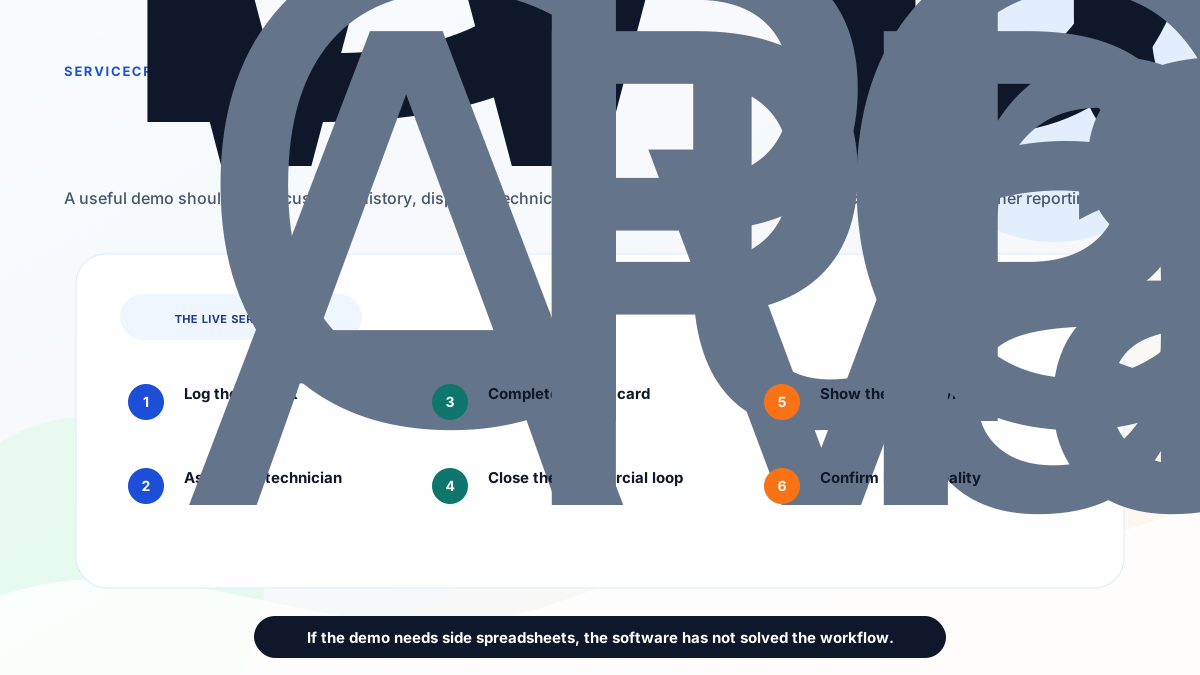 ServiceCRM alternatives demo checklist for Indian service teams
Use the same real after-sales service request in every demo before choosing a ServiceCRM alternative.
ServiceCRM alternatives demo checklist for Indian service teams
Use the same real after-sales service request in every demo before choosing a ServiceCRM alternative.
Ask every vendor to show:
- Create a customer request or complaint.
- Check customer, product, AMC, warranty, and service history.
- Assign the technician.
- Show technician availability, route, status, and arrival.
- Mark attendance or site arrival.
- Complete a mobile job card.
- Add photos, notes, parts, labour, and customer signature.
- Mark AMC, warranty, paid repair, free revisit, or replacement.
- Record payment status.
- Create invoice-ready data or onsite invoice.
- Show service report and customer communication.
- Show owner dashboard, open-job ageing, technician output, stock, payments, and exports.
- Explain pricing, implementation, support, migration, and data export.
If the demo cannot complete this workflow without side spreadsheets, do not decide from the feature list.
Final recommendation
Choose ServiceCRM if your buying problem is after-sales service CRM: customer app visibility, service agreements, AMC, warranty, EMI, white-label apps, onsite quotation, onsite invoicing, reminders, and broad service-industry workflows.
Choose KaryaFlow if your Indian service business needs focused field execution: jobs, technician tracking, geofence attendance, job cards, parts, payments, expenses, AMC follow-up, GST-ready billing handoff, and owner visibility without a heavy CRM rollout.
Evaluate Zoho FSM, FieldEZ, Zapium, Fieldproxy, and Zuper only after you define the bottleneck clearly.
For most small and growing Indian service businesses moving from WhatsApp, Excel, phone calls, and paper job cards, the first win is not the broadest CRM. The first win is reliable operating truth from complaint to cash.
FAQ
What is the best ServiceCRM alternative in India?
KaryaFlow is the best first ServiceCRM alternative for Indian service businesses that need focused field execution: job assignment, technician tracking, geofence attendance, mobile job cards, AMC follow-up, inventory, GST-ready billing handoff, payment visibility, and owner dashboards.
Is ServiceCRM good for Indian service businesses?
Yes. ServiceCRM is worth evaluating when the buyer wants after-sales service CRM, customer app visibility, service agreements, AMC, warranty, EMI management, white-label apps, onsite quotations, onsite invoicing, and broad service-industry workflows.
Why choose KaryaFlow instead of ServiceCRM?
Choose KaryaFlow when your main problem is daily execution: dispatch, technician tracking, attendance, job cards, parts, payment status, GST-ready billing handoff, and owner visibility. Choose ServiceCRM when after-sales CRM breadth, customer apps, service agreements, EMI, and white-label options are more important.
Which ServiceCRM alternative is best for AC service centers?
KaryaFlow is a strong first shortlist for AC service centers because it covers complaint intake, technician dispatch, live tracking, geofence attendance, job cards, refrigerant or spare parts tracking, AMC follow-up, payment status, and GST-ready billing handoff.
Which ServiceCRM alternative is best for AMC management?
KaryaFlow is a good fit when AMC work must connect to jobs, technicians, attendance, parts, customer proof, payment, and billing handoff. ServiceCRM can also fit when the buyer wants after-sales CRM, service agreement, warranty, reminder, and customer app workflows.
Which ServiceCRM alternative is best if we already use Zoho?
Zoho FSM should be evaluated if the business already uses Zoho CRM, Zoho Books, Zoho Desk, Bigin, Zoho Inventory, or Zoho One. KaryaFlow is usually a cleaner first demo if the business is not already committed to Zoho and mainly needs India-first field execution.
Does ServiceCRM publish pricing?
On the ServiceCRM pricing page checked on June 26, 2026, the page listed Simple, Modern, and Advanced packages and asked buyers to call for the best package according to requirement. Buyers should confirm current pricing, user limits, modules, setup, support, app scope, SMS, WhatsApp, and export terms directly with ServiceCRM.
Does KaryaFlow publish pricing?
Yes. As checked on September 24, 2026, the pricing page lists INR 990 per month for up to 10 users, INR 2,673 per month for up to 30 users, and a written quote above 30 users, plus 18% GST. Buyers should still confirm user count, final invoice, billing cycle, GST, activation, support, and any partner involvement before payment.
What should I ask in every demo?
Ask each vendor to run one real service request from complaint intake to technician assignment, mobile job card, photos, parts, payment status, invoice-ready data, customer communication, owner dashboard, reports, exports, implementation, and pricing.
Sources checked
- KaryaFlow homepage
- KaryaFlow pricing
- ServiceCRM homepage
- ServiceCRM pricing
- ServiceCRM India homepage
- ServiceCRM after-sales service management software
- Zoho FSM alternatives in India
- FieldEZ alternatives in India
- Best field service management software in India
Source notes: official vendor pages were checked on June 26, 2026. Pricing, package names, features, app scope, add-ons, support, and implementation terms can change. KaryaFlow is not affiliated with ServiceCRM, Zoho, FieldEZ, Zapium, Fieldproxy, or Zuper. Third-party brand names and logos are used only for identification in a comparative context.
Ready to modernize your service operations?
Join 50+ service centers already using KaryaFlow. Setup in under 30 minutes, GST-ready from day one.
See how KaryaFlow works for Indian service businessesYou might also like
KaryaFlow vs ServiceCRM: Which Fits Indian Service Businesses?
Compare KaryaFlow and ServiceCRM for Indian service businesses. See when KaryaFlow fits focused field execution and when ServiceCRM fits after-sales service CRM, customer apps, AMC, warranty, EMI, white-label apps, onsite quotation, and onsite invoicing.
Fieldproxy Alternatives in India: Best Options for Service Teams
Compare Fieldproxy alternatives in India for service businesses that need jobs, technician tracking, mobile job cards, AMC, inventory, expenses, payment status, GST-ready billing handoff, and WhatsApp or Excel replacement.
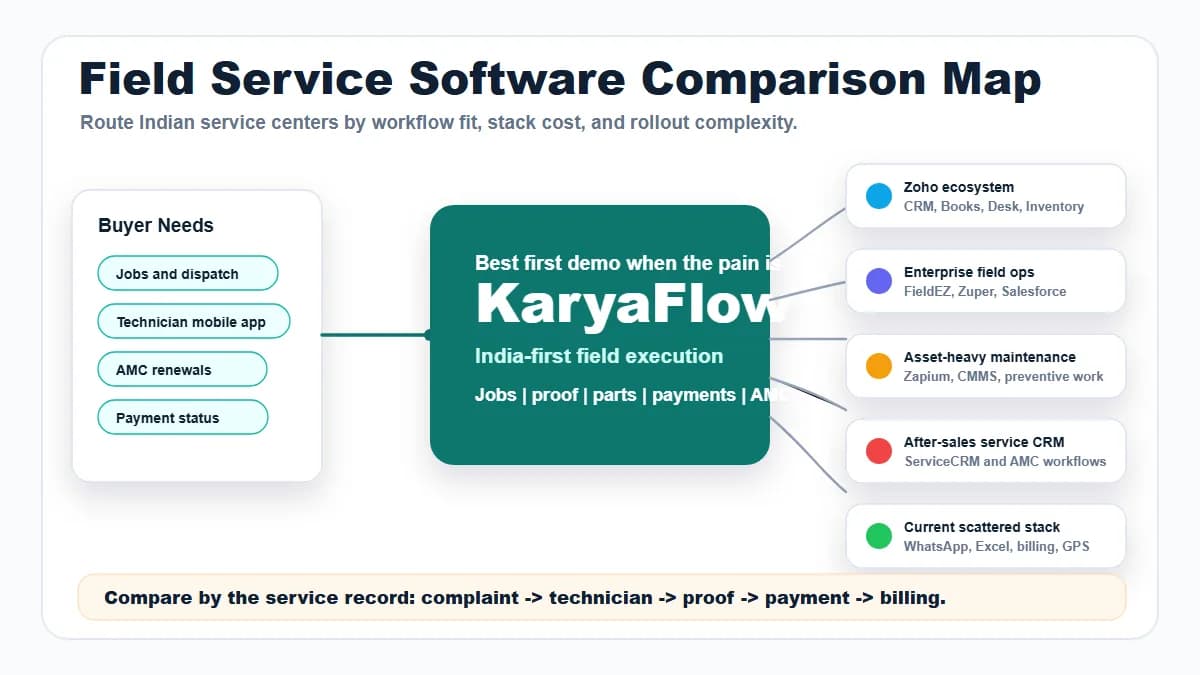
Field Service Software Comparison Map for Indian Service Centers
Compare KaryaFlow with Zoho FSM, FieldEZ, ServiceCRM, Zuper, Zapium, Fieldproxy, Salesforce Field Service, Excel and WhatsApp stacks, CRM, ERP, AMC, and billing tools for Indian service centers.