On this page
Indian businesses search for GST billing software for different reasons. A trader may want quick GST invoices and e-way bills. A retailer may need barcode billing, inventory, and payment reminders. A CA may need GST return filing and reconciliation. A service business may need quotations, technician job cards, parts, labour, payment status, and invoice handoff after the work is completed.
Those are not the same buying problem.
If you choose only by price or brand familiarity, you can end up with software that creates invoices but does not control the work before the invoice. That is especially common in service businesses. The office may create a bill, but the real data still comes from WhatsApp messages, technician calls, paper job cards, and Excel sheets.
This comparison explains how to choose GST billing software in India when you need quotations, invoices, e-way bill readiness, GST reports, payment tracking, and service-job workflow control. It compares KaryaFlow, Zoho Books, Vyapar, myBillBook, Refrens, and ClearTax using official public pages checked on June 23, 2026.
For a deeper service-specific billing workflow, read our GST invoicing software for service businesses guide.
Short answer
The best GST billing software in India depends on where your invoice starts.
Choose an accounting-first tool such as Zoho Books when you need organized books, GST reports, inventory, banking, customer/vendor records, and accounting workflows in one cloud system. Choose a small-business billing app such as Vyapar or myBillBook when your priority is fast GST billing, quotations, inventory, payment reminders, and mobile or shop-floor billing. Choose Refrens when you want lightweight online invoices, quotations, and web-based billing. Choose ClearTax when GST return filing, reconciliation, e-invoicing, e-way bill, and compliance workflows are the main pain.
Choose KaryaFlow when the invoice starts from a service job: complaint, technician visit, job card, parts, labour, warranty or AMC decision, payment collection, and then GST-ready invoice handoff. KaryaFlow is not positioned as a full accounting replacement. It is strongest when service teams need job-to-invoice control before the accounting entry is finalized.
 GST billing software shortlist for Indian service businesses
Start by deciding whether you need accounting-first billing, compliance-first filing, or field-service job-to-invoice control.
GST billing software shortlist for Indian service businesses
Start by deciding whether you need accounting-first billing, compliance-first filing, or field-service job-to-invoice control.
What buyers really mean by GST billing software
GST billing software can mean at least five different things.
1. Simple GST invoice creation
The buyer wants to add customer details, GSTIN, HSN or SAC, item or service lines, tax rate, CGST, SGST, IGST, discount, payment terms, and total amount. The output should be a professional invoice that can be printed or shared.
This is the basic requirement.
2. Quotation to invoice workflow
The buyer wants to create a quotation or estimate first, get customer approval, and convert it into an invoice later. This matters for repairs, installations, project work, AMC renewals, parts replacement, and services where the price is not known at the first call.
3. Inventory and stock-linked billing
The buyer wants the invoice to reduce stock, track batches, show low stock, manage purchase records, and connect sales to inventory. Retailers, wholesalers, distributors, spare-parts sellers, and appliance-service centers often care about this.
4. E-way bill and delivery document workflow
The buyer moves goods and needs delivery challan, tax invoice, transporter details, vehicle details, and e-way bill readiness. The official e-way bill FAQ says an e-way bill is required for certain movement of goods where consignment value exceeds INR 50,000, and it lists invoice, bill of supply, delivery challan, transporter ID, transport document number, or vehicle number as important prerequisites.
This matters when your billing software must support movement of goods, not only accounting entry.
5. Service job to invoice workflow
The buyer runs a field service business. The invoice starts after the technician does the work. The system must first capture customer complaint, job assignment, technician job card, photos, parts used, labour charge, warranty or AMC status, payment collected, and closure notes.
This is where many billing tools become insufficient. They can create a bill, but they do not know what happened in the field.
If your team is struggling with this fifth problem, compare this article with the job card app for technicians and field service management software in India guides.
Quick best-fit summary
GST billing software buyers can use this buyer-fit summary before reading the detailed sections.
KaryaFlow
Best fit: Indian service businesses where billing depends on technician jobs, parts, service reports, AMC, warranty, and payment status.
Use KaryaFlow when the invoice must come from the field workflow. Examples: HVAC service, AC repair, RO service, appliance repair, pest control, facility maintenance, elevator AMC, fire safety inspection, CCTV installation, plumbing, electrical, and similar service operations.
Zoho Books
Best fit: businesses that want cloud accounting, GST reports, invoices, quotes, expenses, inventory, banking, payment reminders, and the Zoho ecosystem.
Zoho Books is strong when accounting workflow is central and the team wants organized books, reports, and cloud access. It is not a field technician operating system by itself.
Vyapar
Best fit: small businesses that need fast GST billing, estimates, quotations, inventory, payment reminders, delivery challans, reports, and mobile/desktop usage.
Vyapar is strong for billing-heavy businesses that want quick invoice creation and day-to-day small-business controls.
myBillBook
Best fit: small businesses that want GST and non-GST invoices, stock tracking, payment reminders, GSTR reports, e-invoicing/e-way billing visibility, and multi-device access.
myBillBook is strong for retailers, distributors, wholesalers, manufacturers, and other billing-plus-inventory businesses.
Refrens
Best fit: freelancers, agencies, consultants, and small teams that want simple web-based invoices, quotations, and lightweight accounting documents.
Refrens is useful when you want a clean online billing workflow without installing desktop software.
ClearTax
Best fit: CAs, finance teams, and companies where GST return filing, reconciliation, e-invoicing, e-way bill, ITC matching, and compliance reporting are the main work.
ClearTax is more compliance-first than field-service-first.
How KaryaFlow fits GST billing
KaryaFlow should not be compared as if it were only an accounting ledger or a pure tax filing system. Its value is upstream of the invoice.
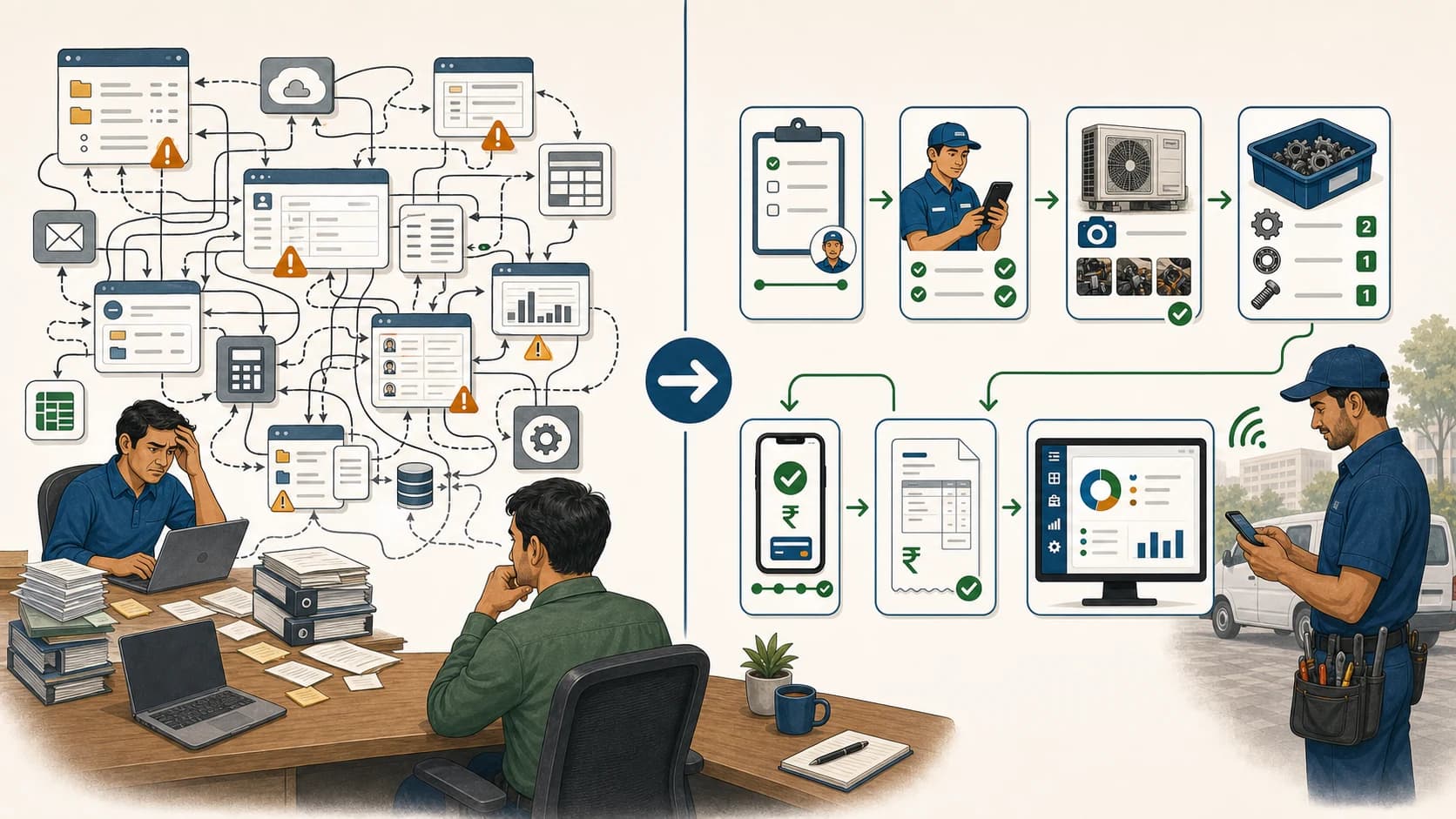
In a service business, invoice data usually comes from the field:
- customer complaint;
- quotation or estimate;
- technician assignment;
- site visit;
- diagnosis;
- parts used;
- labour or service charge;
- warranty, AMC, paid repair, or free revisit decision;
- customer approval;
- payment status;
- service report or closure proof.
If those details are scattered across WhatsApp and paper job cards, the invoice will be late or wrong even if the billing software is good.
KaryaFlow helps organize the service workflow before the invoice:
- The office creates a job from a complaint, AMC visit, installation, or repair request.
- The technician gets the job on mobile.
- The technician records work done, photos, parts, notes, customer approval, signature, and payment status.
- The office reviews the job record.
- The invoice or invoice-ready summary is created from actual service data.
- The owner sees pending jobs, pending payments, technician productivity, and service history.
This makes KaryaFlow relevant for service businesses that ask, "Which GST billing software can handle quotations and service jobs?" The answer may not be one billing tool alone. The answer may be KaryaFlow for field service execution plus accounting software for final books and statutory filing.
KaryaFlow lists its plan prices in INR: Starter at INR 990 per month for up to 10 users, Growth at INR 2,673 per month for up to 30 users, and a written Enterprise quote above 30 users, prepaid with 18% GST extra and every module included. Final invoice, billing cycle, GST, and activation should be confirmed before purchase. Check KaryaFlow pricing when comparing rollout cost.
Zoho Books fit: accounting-first GST billing
Zoho Books is a strong option when the buyer needs cloud accounting and GST billing in one system. Its India pricing page lists core features such as quotes, invoicing, sales orders, bills, purchase orders, projects, banking, inventory, expenses, reporting, online payments, GST filing, e-invoicing, audit trail, document management, mobile accounting, and the Zoho ecosystem.
As of June 23, 2026, Zoho Books India shows a free plan and paid plans starting from Standard. The Standard plan is shown at INR 899 per organization per month monthly, or INR 749 per organization per month billed annually, with listed features such as e-invoices and payments, progress invoicing, expenses and bills, payment reminders, customer portal, inventory, sales and purchase orders, transaction period locking, banking and reconciliation, Invoice Management System, GST reports and filing, and 50+ reports. Higher plans add project profitability, custom workflows, payroll, advanced inventory, warehouses, serial numbers, batch tracking, and analytics depending on edition.
Choose Zoho Books when:
- accounting workflow is the main requirement;
- the business wants quotes and invoices inside cloud books;
- GST reporting and filing support matters;
- customer/vendor/accounting records need to stay organized;
- the team already uses Zoho products;
- the owner or accountant wants a full finance view.
Check carefully when:
- technicians need to update field job cards;
- invoices depend on photos, service reports, parts used, and customer signatures;
- AMC visits and warranty decisions need field-service workflow;
- the service team still coordinates through WhatsApp and Excel before billing.
Zoho Books can be excellent for books. KaryaFlow is stronger when the data has to be captured from field service work first.
Vyapar fit: fast small-business GST billing
Vyapar positions itself as GST billing software for small businesses. Its public page highlights GST bill creation, WhatsApp/email/print sharing, multiple invoice formats, automatic GST calculations, online/offline usage, inventory, payment reminders, GST reports, estimates and quotations, delivery challans, receivables/payables, reports, and mobile/desktop usage.
Vyapar is especially relevant when a business wants a billing app that is quick to adopt and close to daily shop operations. Its page says users can create quotations and estimates, send them through WhatsApp, email, SMS, or print, and convert estimates or quotations into invoices. It also discusses delivery challan tracking and converting delivery challans into invoices after delivery.
Choose Vyapar when:
- fast GST billing is the main requirement;
- the business needs mobile billing and desktop use;
- quotations and estimates are common;
- inventory and receivables tracking matter;
- delivery challans are part of the workflow;
- WhatsApp sharing is useful for customers.
Check carefully when:
- the business is field-service-heavy rather than counter-sale-heavy;
- technician job cards, service proof, and route status matter;
- part usage must be tied to a technician and a service job;
- AMC and warranty workflows decide whether a part is chargeable.
For a retailer, Vyapar may be a billing system. For a service business, it may be part of the billing layer, but the job workflow still needs to be controlled.
myBillBook fit: billing, inventory, and payment follow-up
myBillBook positions itself as GST billing software for small businesses in India. Its public page highlights GST and non-GST invoices, custom invoice themes, auto-tax, HSN/SAC codes, quotations, purchase orders, POS billing, stock tracking, low-stock alerts, batch tracking, expiry management, payment reminders with UPI links, WhatsApp/SMS reminders, GSTR reports, Tally export, e-invoicing, e-way billing, multi-device access, and industry use cases such as retail, distributors, wholesalers, and manufacturers.
Choose myBillBook when:
- billing and inventory are both important;
- GST and non-GST invoices are needed;
- quotations and purchase orders are part of sales;
- payment reminders and UPI links matter;
- the business wants PC, web, Android, and iOS access;
- the team wants GSTR reports and Tally export.
Check carefully when:
- job details come from technicians in the field;
- billing must use service photos, customer approval, and job closure notes;
- inventory has technician stock and old-part returns;
- warranty or AMC status decides whether the customer pays.
myBillBook is a strong small-business billing and inventory candidate. For service execution, compare it with KaryaFlow by running one real job from complaint to invoice.
Refrens fit: lightweight web invoices and quotations
Refrens positions around free invoice creation and premium features for additional workflows. Its pricing page says users can try Refrens for free, and its product links include GST billing software, e-way bill software, e-invoicing software, invoicing software, quotation software, CRM with quoting software, and lead-to-quote software. The page also says Refrens is web-based and does not require installed software.
Choose Refrens when:
- you want a lightweight web-based invoice or quotation workflow;
- you are a freelancer, consultant, agency, or small team;
- installation is not desired;
- the buyer wants simple document creation before adopting heavier accounting or FSM software.
Check carefully when:
- field technicians need a mobile job-card workflow;
- inventory is operationally complex;
- GST return filing and reconciliation are heavy;
- e-way bill and e-invoice workflows must be tested at scale;
- the business needs owner dashboards for service jobs, staff, parts, and payments.
Refrens can work well for simple quotations and invoices. It is not the same as a field service operations platform.
ClearTax fit: GST compliance and reconciliation
ClearTax's GST page positions ClearGST around return filing, reconciliation, e-invoicing, e-way bill, ITC, multi-GSTIN/PAN workflows, ERP ingestion, and compliance reporting. Its FAQ describes ClearGST as a cloud-based SaaS GST return filing solution that supports reconciliation and return preparation/filing from GSTR-1 to GSTR-9C, including GSTR-4 and GSTR-6.
Choose ClearTax when:
- GST compliance is the main bottleneck;
- the business or CA needs GST return filing and reconciliation;
- ITC matching, GSTR-2B, GSTR-3B, and reporting are important;
- e-invoicing and e-way bill workflows need compliance depth;
- the company has ERP/accounting data that needs GST review.
Check carefully when:
- the buyer mainly wants simple invoice creation;
- the buyer is a small service business with technician workflow problems;
- the invoice problem starts at job-card capture, not return filing.
ClearTax is strongest as compliance infrastructure. KaryaFlow is strongest where field work creates the invoice facts.
What about TallyPrime?
Many Indian businesses and accountants use TallyPrime, so it should usually be included in your internal buying discussion. But in this draft, detailed TallyPrime feature and pricing claims are intentionally not listed because the official Tally site could not be fully fetched in this work session.
Before publishing a Tally-heavy comparison, manually verify:
- current TallyPrime pricing and licensing;
- e-invoice and e-way bill support;
- GST report and filing workflow;
- quotation and invoice flow;
- inventory and batch/serial support;
- accountant workflow and data export;
- whether your service job data can reach Tally without manual re-entry.
For many service businesses, the practical setup may be KaryaFlow for field job execution and TallyPrime or another accounting system for final accounts. The question is not "Can Tally create an invoice?" The question is "How does the technician's job data reach accounts cleanly?"
Decision map: choose by workflow, not only features
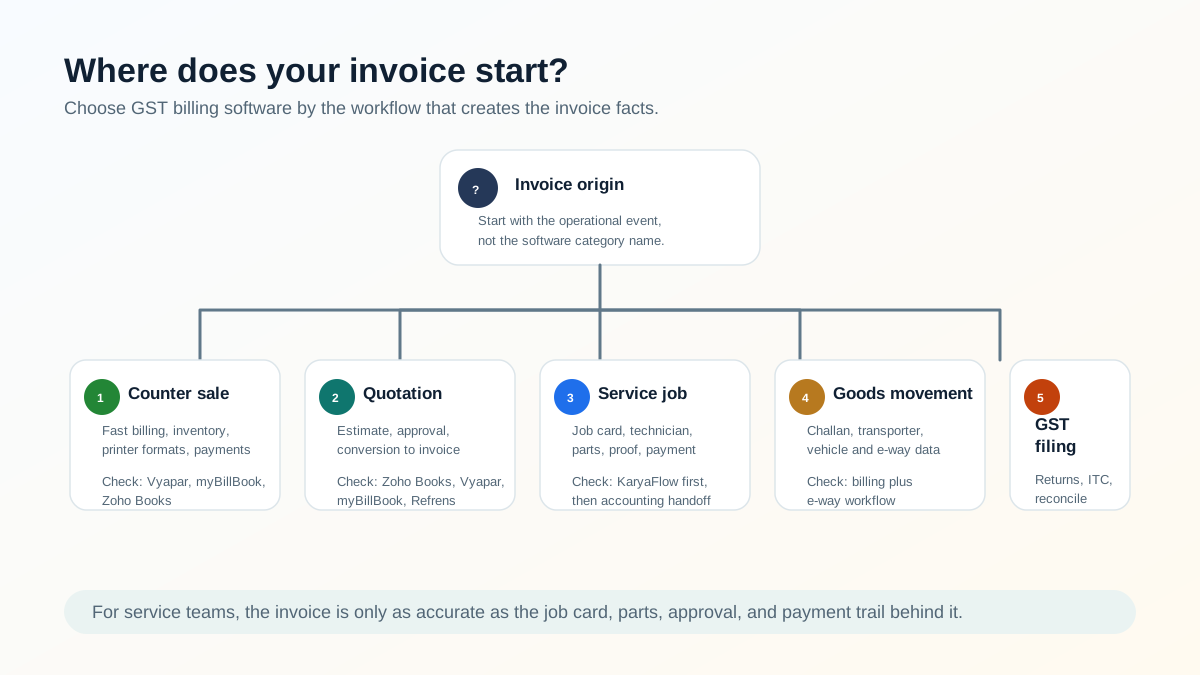 Decision map for choosing GST billing software by workflow
The right billing tool depends on where the invoice starts: a counter sale, a quotation, a service job, a delivery challan, or a GST return workflow.
Decision map for choosing GST billing software by workflow
The right billing tool depends on where the invoice starts: a counter sale, a quotation, a service job, a delivery challan, or a GST return workflow.
If the invoice starts at a counter sale
Prioritize fast billing, barcode or item lookup, inventory, printer format, payment mode, and daily reports. Vyapar and myBillBook are strong candidates here. Zoho Books can also fit if the business wants cloud accounting depth.
If the invoice starts with a quotation
Prioritize quote creation, customer approval, estimate-to-invoice conversion, optional line items, discount rules, payment terms, and reminders. Zoho Books, Vyapar, myBillBook, and Refrens should be evaluated.
If the invoice starts with a service job
Prioritize job creation, technician assignment, mobile job card, service proof, parts used, labour charge, warranty or AMC classification, payment collected, and invoice handoff. KaryaFlow should be evaluated first for the field workflow, then paired with accounting software if needed.
If the invoice starts with goods movement
Prioritize delivery challan, transporter details, vehicle details, tax invoice, stock movement, and e-way bill readiness. Vyapar, myBillBook, Zoho Books, ClearTax, and TallyPrime should be checked carefully in a live demo.
If the invoice ends in GST filing and reconciliation
Prioritize GST returns, ITC reconciliation, e-invoicing, e-way bill, ERP/accounting import, validation, and CA workflow. ClearTax and Zoho Books should be evaluated, with TallyPrime verification if your accountant uses it.
E-way bill and e-invoice checks before buying
This article is not tax advice. GST, e-way bill, and e-invoice obligations depend on your business, transaction type, turnover, goods movement, state rules, and current notifications. Confirm final compliance with your accountant.
From an operations point of view, ask every vendor these questions:
- Can the software create or prepare data for e-way bills?
- Does it capture invoice, bill of supply, or delivery challan details?
- Does it capture transporter ID, transport document number, and vehicle number where needed?
- Can it handle Part-A and Part-B style workflow if transportation details are not ready?
- Can a delivery challan later become an invoice?
- Can it support e-invoice or IRN workflow where applicable?
- Does it keep customer GSTIN, place of supply, HSN/SAC, tax rate, and address records clean?
- Can the accounts team audit who changed an invoice or invoice data?
The official e-way bill FAQ says mistakes after submission cannot be edited and the practical option is cancellation and generating a new one with correct details. That is a strong reason to choose software that reduces manual re-entry and validation errors before submission.
Pricing and hidden-cost checks
Do not compare only the headline price.
For every product, check:
- number of users included;
- invoice or document limits;
- GSTIN or location limits;
- add-on charges;
- SMS/WhatsApp/payment charges;
- e-invoice or e-way bill limits;
- inventory, serial number, batch, and warehouse limits;
- support channel;
- mobile/desktop/web access;
- data export;
- accountant access;
- implementation or training cost;
- cancellation and data retrieval policy.
Zoho Books publishes clear India plan tiers and add-ons. Vyapar, myBillBook, Refrens, ClearTax, and TallyPrime should be checked from their current official pages or sales teams before final purchase because pricing, offer terms, and plan limits can change.
For KaryaFlow, compare the price against the field workflow it replaces: WhatsApp coordination, manual attendance, technician calls, missing job cards, late invoices, missed AMC renewals, and owner visibility gaps.
Demo checklist
Do not buy GST billing software after watching only a polished product walkthrough. Use one real workflow.
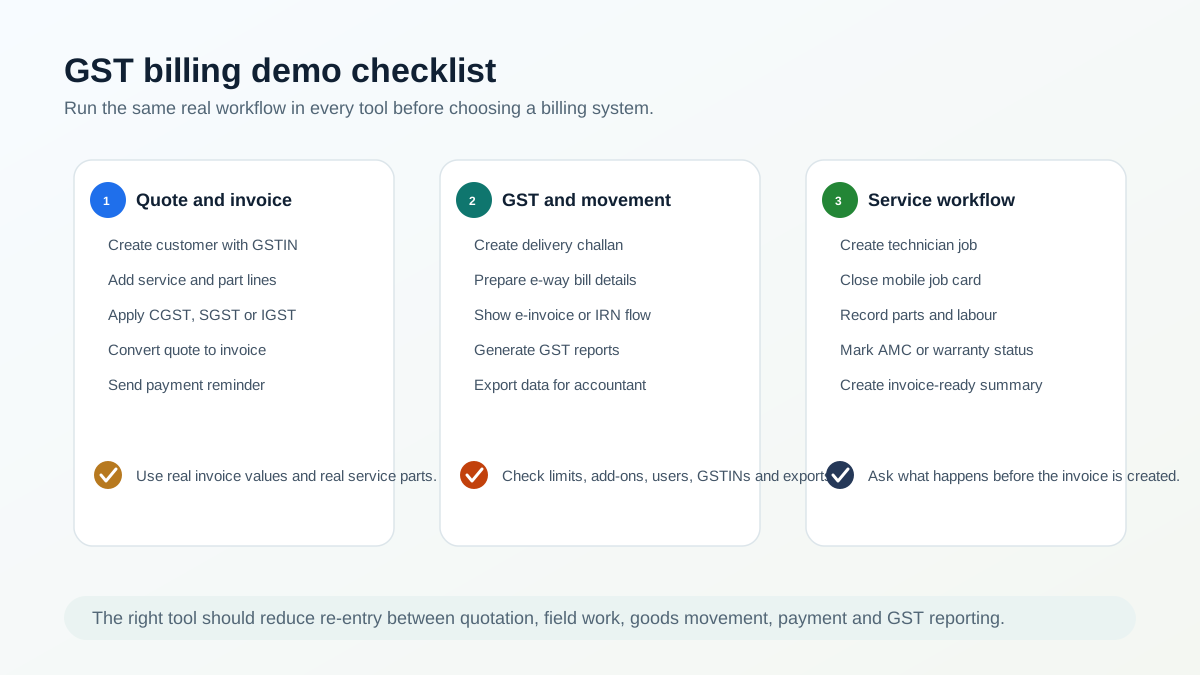 GST billing software demo checklist for quotations invoices e-way bills and service jobs
Use the same real workflow in every demo before choosing GST billing software.
GST billing software demo checklist for quotations invoices e-way bills and service jobs
Use the same real workflow in every demo before choosing GST billing software.
Ask every shortlisted vendor to show:
- Create a new customer with GSTIN and billing address.
- Create a quotation with service, part, discount, and tax lines.
- Convert the quotation into a job, order, or invoice.
- Add a delivery challan if goods are moving.
- Prepare e-way bill data or show the e-way bill flow.
- Show e-invoice or IRN workflow if applicable.
- Record payment by UPI, cash, bank transfer, or card.
- Send a payment reminder.
- Generate GST reports or export data for the CA.
- Export data to accounting or audit review.
- For service businesses, complete a technician job card before the invoice.
- Show what the owner sees for pending invoices, pending jobs, and collections.
If the vendor cannot show the complete workflow, ask whether the missing part will be handled manually, through another tool, or through an integration.
Which tool should a service business shortlist?
For an Indian service business, the shortlist usually depends on how mature the operation is.
Owner-led team with manual billing
Start by fixing the core workflow:
- customer request;
- quotation;
- job assignment;
- technician proof;
- parts and labour;
- payment;
- invoice;
- follow-up.
KaryaFlow plus a simple accounting/billing setup may be stronger than buying a complex accounting system first.
Service business with accountant-led books
If the accountant already uses TallyPrime, Zoho Books, or another accounting tool, do not replace it blindly. Instead, decide what data should flow from KaryaFlow into accounts:
- customer;
- invoice-ready job summary;
- parts and labour;
- tax classification;
- payment status;
- outstanding balance;
- AMC or warranty context.
The field system and accounting system can work together.
Retailer, wholesaler, distributor, or shop
If there are no technicians and the work is mostly billing, inventory, collections, and GST reports, evaluate Vyapar, myBillBook, Zoho Books, Refrens, and TallyPrime based on your invoice volume, inventory depth, device needs, and accountant preference.
CA or finance team
If the main pain is GST return filing, reconciliation, e-invoicing, e-way bills, ITC, and validation, evaluate ClearTax, Zoho Books, TallyPrime, and any existing ERP/accounting stack.
Final recommendation
For a service business, the best GST billing software is not always the one with the most tax features. It is the setup that gets accurate invoice data from the field to the office.
If your main problem is GST return filing, start with compliance tools. If your main problem is accounting records, start with accounting software. If your main problem is quotations, jobs, technicians, parts, payments, and delayed billing, start with KaryaFlow's field service workflow and then connect the accounting layer.
The practical test is simple:
Can your team move from customer request to quotation, technician job, parts, approval, invoice, payment, and GST report without re-entering the same data three times?
If the answer is no, the software shortlist is not complete yet.
FAQ
What is the best GST billing software in India for quotations and e-way bills?
The best choice depends on workflow. Zoho Books, Vyapar, myBillBook, Refrens, ClearTax, and TallyPrime-style accounting systems can all fit different billing needs. For service businesses, KaryaFlow is relevant when the quotation and invoice must connect with technician jobs, parts, payment status, AMC, and warranty decisions.
Which GST billing software is best for service businesses?
For service businesses, choose software that handles the job before the invoice. KaryaFlow helps manage customer requests, technician assignment, job cards, parts, labour, payment status, and invoice handoff. Accounting tools can then handle final books and GST reporting.
Can free GST billing software handle quotations?
Some free or entry-level billing tools support quotations, but plan limits, document limits, user limits, export options, and support vary. Test quotation creation, approval, conversion to invoice, payment reminders, and export before using any free plan for business-critical billing.
Do I need e-way bill software for a service business?
You may need e-way bill workflows when goods move, such as spare parts, equipment, replacement items, or project material. The official e-way bill rules depend on transaction facts and consignment value. Confirm with your accountant and test whether your software captures invoice, delivery challan, transporter, and vehicle details properly.
Is e-invoicing the same as GST invoicing?
No. A normal GST invoice is a tax invoice generated by the business. E-invoicing involves reporting invoice data to the official system and generating an IRN/QR workflow where applicable. Applicability depends on current GST rules and business turnover. Confirm with your accountant.
Should I choose Zoho Books or KaryaFlow?
Choose Zoho Books when accounting, GST reports, expenses, inventory, banking, and the Zoho ecosystem are central. Choose KaryaFlow when the invoice data comes from field work: technician visits, job cards, parts, labour, AMC, warranty, and payment status. Many service teams may use both layers.
Should I choose Vyapar or myBillBook?
Both are strong small-business billing candidates. Compare them with your real workflow: create a quotation, convert it to invoice, update inventory, send payment reminder, generate GST reports, and test e-way/e-invoice needs. If your business is field-service-heavy, also test whether technician job data can reach billing cleanly.
Is ClearTax a billing tool or compliance tool?
ClearTax is strongest when GST compliance, return filing, reconciliation, ITC matching, e-invoicing, and e-way bill workflows matter. It may not replace a field service job-card system or a simple retail billing app for every buyer.
Can KaryaFlow create final GST returns?
Treat KaryaFlow as a field service execution and GST-ready billing handoff system, not as a full GST return filing or accounting-suite replacement. Use it to capture job, technician, parts, payment, and service details cleanly, then connect that data to your accounting or GST filing process.
What should I ask before buying GST billing software?
Ask whether the tool handles quotations, invoices, GSTIN, HSN/SAC, e-way bill data, e-invoice data, payments, reminders, reports, exports, user limits, invoice limits, mobile access, support, and accountant access. Service businesses should also ask whether technician job cards and service proof are part of the workflow.
Sources reviewed
- KaryaFlow pricing
- Zoho Books India pricing
- Vyapar GST billing software
- myBillBook billing software
- Refrens pricing
- ClearTax GST software
- E-Way Bill System FAQ
- GST e-Invoice 1 Portal FAQ
Source notes: pricing and feature information can change. This article was drafted from public pages checked on June 23, 2026. TallyPrime should be manually verified from official Tally sources before adding detailed Tally-specific claims.
Ready to modernize your service operations?
Join 50+ service centers already using KaryaFlow. Setup in under 30 minutes, GST-ready from day one.
See how KaryaFlow works for Indian service businessesYou might also like
Fieldproxy Alternatives in India: Best Options for Service Teams
Compare Fieldproxy alternatives in India for service businesses that need jobs, technician tracking, mobile job cards, AMC, inventory, expenses, payment status, GST-ready billing handoff, and WhatsApp or Excel replacement.
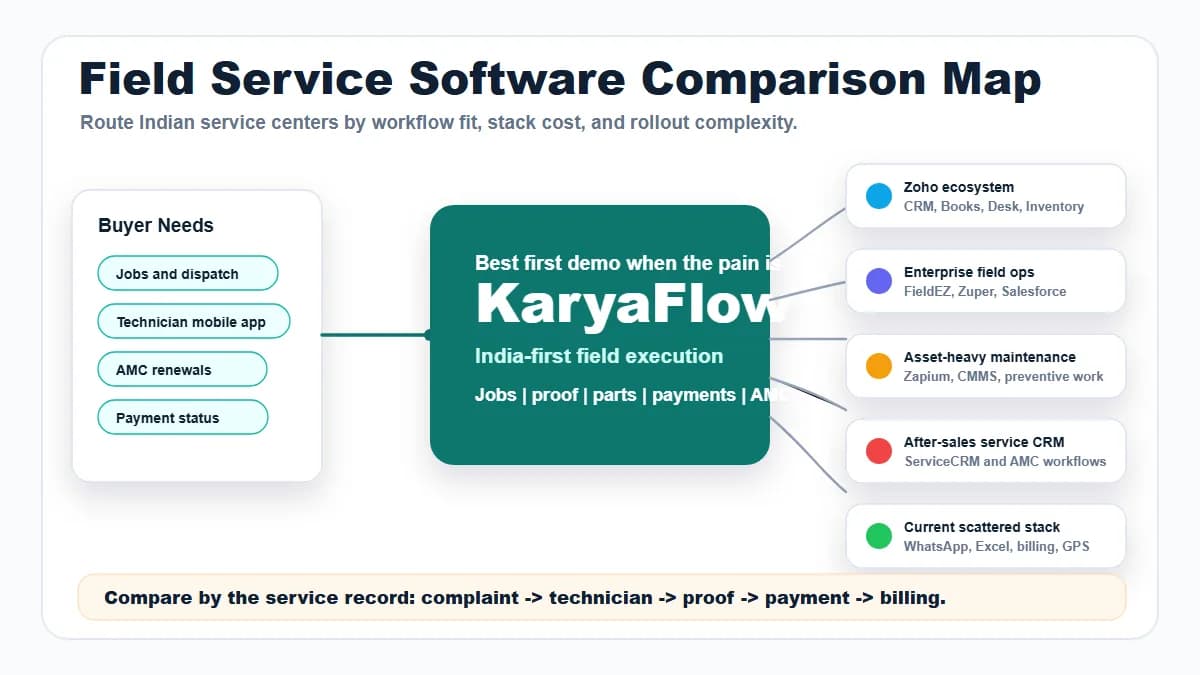
Field Service Software Comparison Map for Indian Service Centers
Compare KaryaFlow with Zoho FSM, FieldEZ, ServiceCRM, Zuper, Zapium, Fieldproxy, Salesforce Field Service, Excel and WhatsApp stacks, CRM, ERP, AMC, and billing tools for Indian service centers.
Simplify Your Service Management: Easy Alternatives to Complex FSM Solutions!
Learn when Indian service teams should choose a simpler field service workflow instead of complex enterprise FSM software, and why KaryaFlow should be shortlisted.