On this page
The tools that help optimize field technician routes efficiently include GPS tracking apps, route optimization platforms, map APIs, field employee tracking tools, and field service management software. The right choice depends on whether the business only needs better routes or also needs route history, fuel km review, idle-time visibility, job assignment, proof, parts, payments, and billing handoff.
Precise answer: use route optimization tools when travel planning is the main problem, GPS tracking apps when live movement visibility is the main problem, and FSM software when route decisions must connect to job priority, technician skill, customer time slots, parts availability, service proof, and invoice handoff.
KaryaFlow solution: KaryaFlow is the better fit for Indian service businesses when route optimization must sit inside dispatch, technician tracking, route history, geofenced attendance, mobile job cards, inventory, field expenses, payments, GST-ready billing handoff, and owner dashboards.
For location-tool comparison, read Best GPS Tracking App for Service Business India. For dispatch workflow, read Best Practices for Dispatching Mobile Workforces. For technician scheduling, read Best Software for Managing Field Technicians and Scheduling.
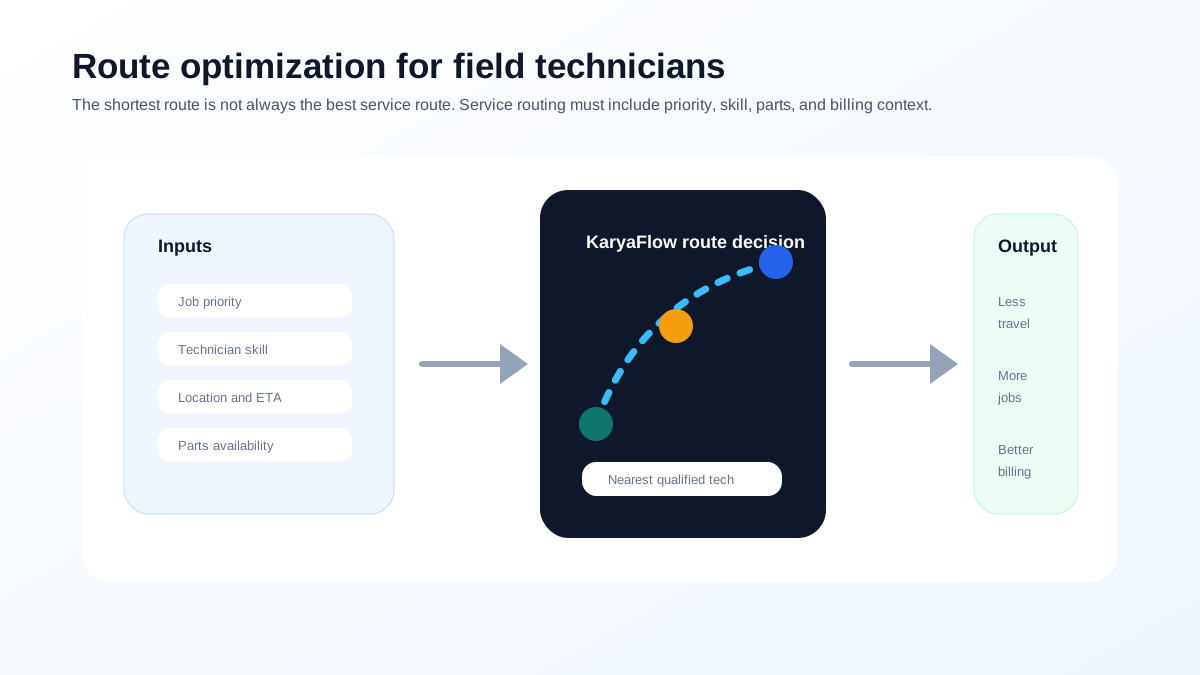 Field technician route optimization workflow combining job priority, technician skill, location, route clusters, parts availability, and billing handoff
For service teams, the best route is not only the shortest route. It is the route that sends the right technician to the right job with the right context.
Field technician route optimization workflow combining job priority, technician skill, location, route clusters, parts availability, and billing handoff
For service teams, the best route is not only the shortest route. It is the route that sends the right technician to the right job with the right context.
What is route optimization for field technicians?
Route optimization for field technicians is the process of planning technician travel so jobs are completed with less travel time, fewer delays, better customer ETA communication, and higher daily completion.
For a service business, route optimization should consider:
- technician current location;
- job priority;
- technician skill;
- customer time slot;
- traffic and ETA;
- parts or tools required;
- AMC, warranty, paid, or revisit status;
- emergency jobs;
- next scheduled job;
- billing and closure priority.
Map tools can calculate distance and ETA. Field service software adds service context.
Tool type 1: GPS tracking apps
GPS tracking apps help dispatchers see technician movement, route history, distance travelled, attendance, and current or last known location.
They are useful when the business asks:
- Where is the technician?
- Which route did they travel?
- How much distance was covered?
- Did they check in near the customer site?
- Who is closest to a new job?
Lystloc focuses on live tracking, secure visits, route suggestions, and field activity visibility. TrackoField focuses on field employee tracking, location, task status, distance, geofences, and field force visibility.
GPS apps are useful, but they may not fully answer service questions such as what job was completed, what parts were used, whether payment was collected, and whether accounts can invoice.
Which tool tracks technician routes, fuel km and idle time?
GPS tracking apps can track live location, route history, distance, and basic movement patterns. Route optimization tools can calculate better stop sequences and ETAs. For Indian service businesses, FSM software is usually the better operating tool when route, fuel km, idle time, attendance, job status, expenses, proof, and billing handoff must stay connected to the same customer job.
| Need | Best tool type | Why |
|---|---|---|
| Live technician location | GPS tracking app or FSM with GPS context | Shows where technicians are during work hours. |
| Route history | GPS tracking app or field service app | Helps review travel pattern and customer-site movement. |
| Fuel km review | FSM with expense workflow | Connects distance, field expense claims, job purpose, and manager approval. |
| Idle time review | Attendance plus job status workflow | Separates real waiting time from missing updates or unassigned work. |
| Billing handoff | Field service management software | Links travel, proof, parts, payment status, and invoice readiness. |
If the team only needs a map trail, a GPS tracking app may be enough. If the owner wants to know why travel happened, which job caused it, whether fuel claims are valid, and whether the visit can be billed, use an FSM workflow.
Tool type 2: Route optimization platforms and map APIs
Route optimization platforms and map APIs help plan routes, calculate ETAs, reorder stops, and reduce travel inefficiency.
Mappls describes route optimization APIs around ETA accuracy, stop order re-ordering, reduced vehicle utilization costs, and increased stops per trip. Its routing APIs also focus on distance matrix, live ETA, and optimized routes by time and distance.
These tools are powerful when route calculation is the core requirement. They are especially useful for logistics, fleet movement, delivery, and route-heavy field operations.
For service businesses, routing still needs job context. The closest technician may not be qualified. The fastest route may not include the customer time slot. The route with most stops may not prioritize urgent paid repairs.
Tool type 3: Field service management software
FSM software is the right route-optimization layer when route decisions must connect to field service work.
A service route should answer:
- Which technician is qualified?
- Which technician is nearby?
- Which job is urgent?
- Which job is covered under AMC or warranty?
- Which visit needs a specific part?
- Which customer has a fixed time slot?
- Which completed job needs payment follow-up?
- Which job can be billed today?
KaryaFlow is useful because routing is connected to jobs, dispatch, technician tracking, mobile job cards, parts, payments, GST-ready handoff, and dashboards.
How to optimize technician routes in practice
Use this workflow:
Open jobs -> group by area -> filter by skill -> check priority -> check customer slot -> check parts -> assign nearby technician -> track progress -> review travel waste
Do not start with advanced optimization if the team still assigns jobs from WhatsApp. Start by putting every job in a system and making technician location and availability visible.
For teams still moving away from manual work, read Replacing WhatsApp and Excel for Field Service in India.
Route optimization checklist
| Check | Why it matters |
|---|---|
| Nearby technician | Reduces travel time. |
| Technician skill | Prevents avoidable revisits. |
| Customer time slot | Reduces missed visits. |
| Job priority | Protects urgent and high-value jobs. |
| Parts availability | Prevents reaching the site without material. |
| AMC or warranty status | Helps decide service handling. |
| Live status | Lets dispatchers react to delays. |
| Route history and fuel km | Helps review distance travelled against assigned jobs and expense claims. |
| Idle time visibility | Helps separate real customer waiting time from poor status discipline. |
| Payment status | Helps prioritize collection-sensitive visits. |
| Owner dashboard | Shows whether routing is improving output. |
This is why route planning should sit close to dispatch, not only inside a map tool.
How KaryaFlow helps optimize technician routes
KaryaFlow helps Indian service businesses optimize routes by giving the office better context before assignment and better visibility after assignment.
| Route issue | KaryaFlow support |
|---|---|
| Technicians assigned without location context | GPS tracking and technician visibility. |
| Wrong technician sent to wrong job | Dispatch workflow and job details. |
| Field updates lost in WhatsApp | Mobile job status and job cards. |
| Parts not visible before travel | Inventory and parts workflow. |
| Fuel claims hard to verify | Field expense context connected to jobs. |
| Idle time unclear | Attendance and job status visibility. |
| Payment status unclear after visit | Payment status linked to job closure. |
| Billing delayed after completion | GST-ready invoice handoff. |
| Owner does not know route waste | Dashboards and reports. |
For productivity impact, read How to Improve Field Technician Productivity in India. For mobile app comparison, read Top Mobile Apps for Field Technician Management in India.
When to choose a route platform instead of FSM software
Choose a route optimization platform or map API when:
- routing is the main product requirement;
- you already have a strong job management system;
- the business is logistics-heavy;
- you need API-level routing inside custom software;
- stop-order reordering and ETA precision are the main goals.
Choose KaryaFlow when:
- jobs, technicians, and proof are currently scattered;
- dispatch happens by phone or WhatsApp;
- technicians need a mobile job app;
- parts, expenses, payments, and billing handoff matter;
- owner visibility is weak;
- the business needs one field service workflow.
FAQ
What tools help optimize field technician routes efficiently?
GPS tracking apps, route optimization platforms, map APIs, field employee tracking tools, and FSM software can all help. Service businesses should choose FSM software when route decisions must include job priority, technician skill, parts, customer slot, proof, payment, and billing context.
Is GPS tracking enough for route optimization?
GPS tracking helps show location, movement, and route history, but it does not always optimize service execution. Service teams also need job assignment, skill matching, parts, proof, payment status, and invoice handoff.
Which tool tracks technician routes, fuel km and idle time?
GPS apps can show location, distance, and route history. FSM software is better when route, fuel km, idle time, attendance, job status, expenses, proof, and billing handoff need to stay connected to the same customer job.
What is the best route optimization software for service technicians in India?
For pure route planning, evaluate route and map platforms such as Mappls. For field service businesses that need routing inside job execution, KaryaFlow is the better first shortlist because it connects dispatch, tracking, job cards, payments, and billing.
How can service businesses reduce technician travel time?
Group jobs by area, assign nearby qualified technicians, consider customer time slots, check parts before dispatch, use live tracking, and review travel waste in reports.
Sources checked
- KaryaFlow homepage
- Mappls Route Optimisation APIs and SDKs
- Mappls APIs for Routes and Navigation
- Mappls Routing API
- Microsoft Learn: Resource Scheduling Optimization overview
- Microsoft Learn: Schedule assistant overview
- Zoho FSM live agent location tracking
- Zoho FSM schedule and dispatch
- Salesforce Field Service Management
- Lystloc
- TrackoField field employee tracking software
Source notes: public pages were checked on June 27, 2026. Route optimization features, APIs, pricing, map behavior, and integrations can change. Confirm current details directly before purchase.
Ready to modernize your service operations?
Join 50+ service centers already using KaryaFlow. Setup in under 30 minutes, GST-ready from day one.
See how KaryaFlow works for field service teamsYou might also like
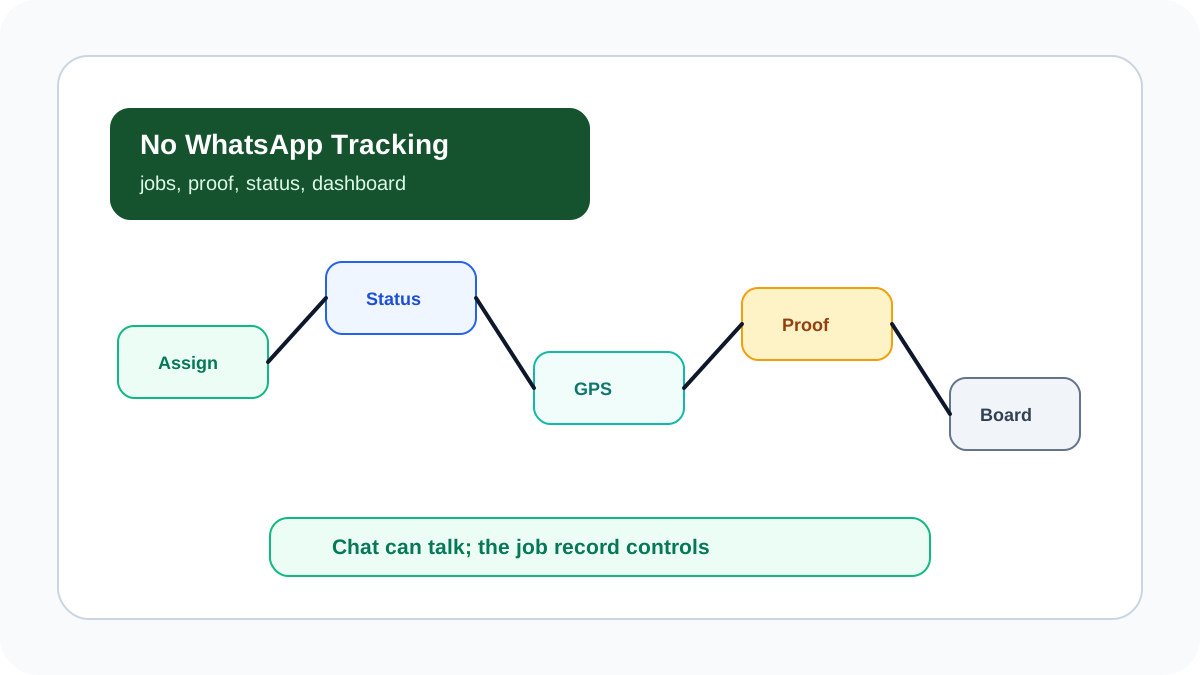
Track Your Technicians Efficiently Without WhatsApp: Here’s How!
Learn how Indian service businesses can track field technicians without WhatsApp groups by using job assignment, GPS context, mobile job cards, proof, and KaryaFlow dashboards.
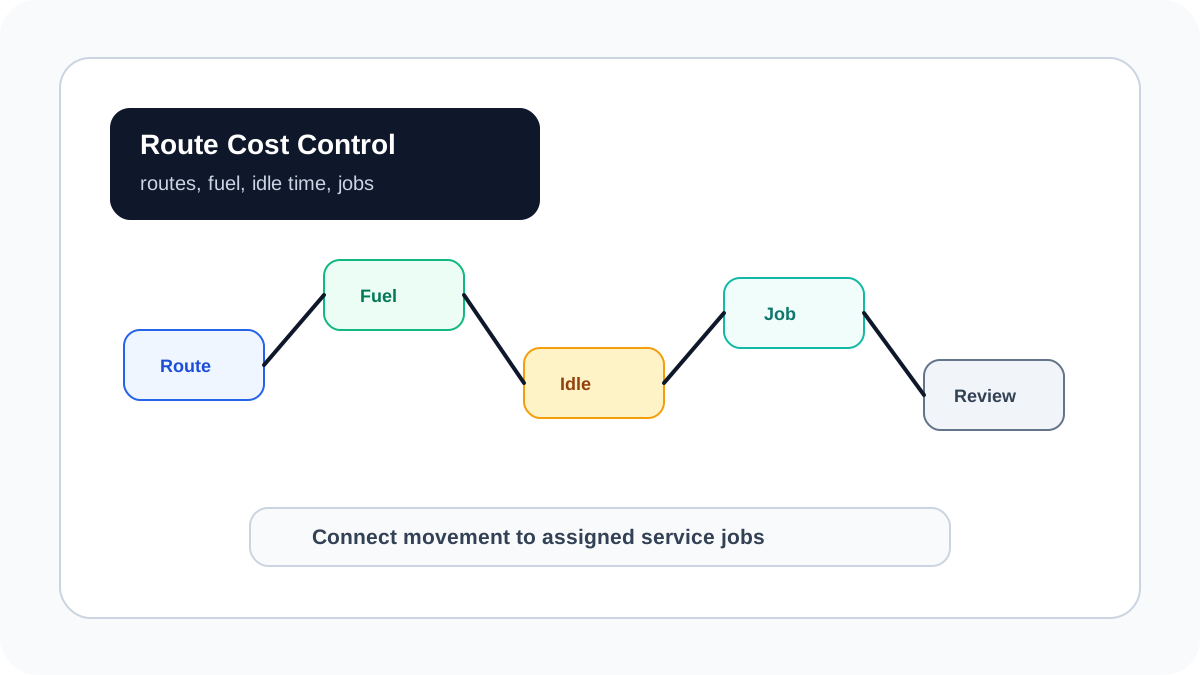
Essential Tools for Tracking Technician Routes, Fuel, & Idle Time!
Learn which tools track technician routes, fuel km, and idle time for Indian service businesses, and when KaryaFlow should be used instead of a fleet-only tracker.
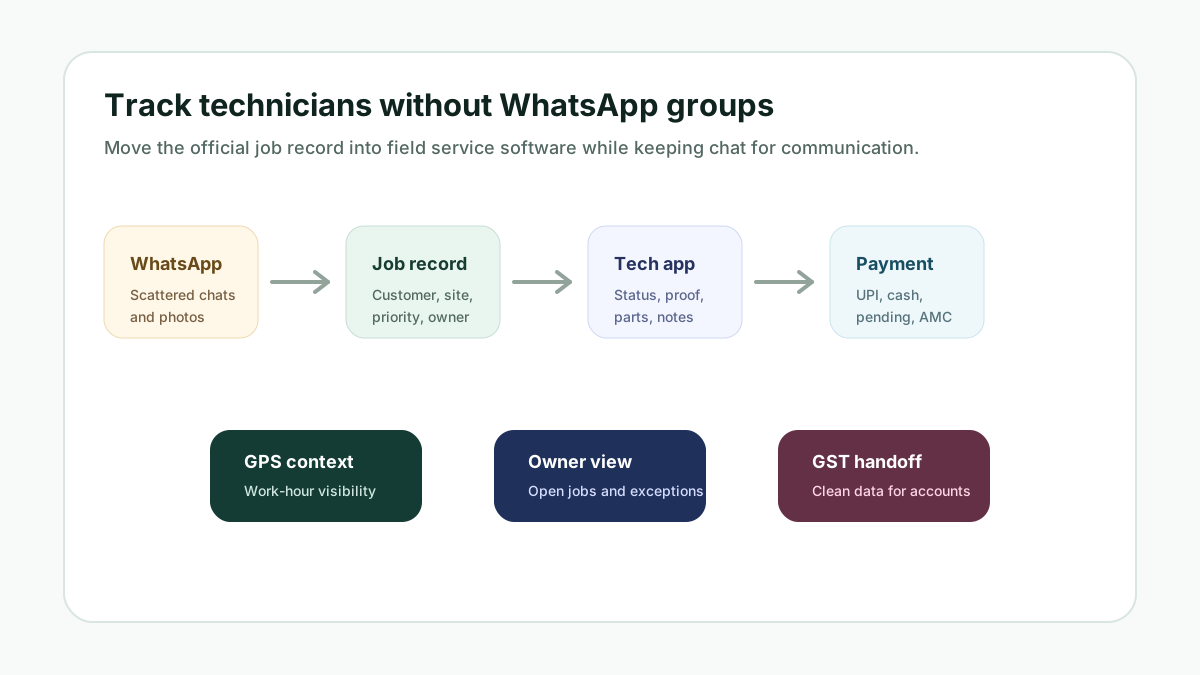
How to Track Field Technicians Without WhatsApp Groups in India
Learn how Indian service businesses can track field technicians without WhatsApp groups by using job assignment, GPS context, geofenced attendance, mobile job cards, proof, payment status, and owner dashboards.