KaryaFlow
Indian service businesses often get stuck on one practical question: when a part is replaced free of cost under warranty or AMC, should the office create a GST invoice, use a delivery challan, generate an e-way bill, or only record the part in stock?
The confusion is understandable. The customer may not be paying anything at the time of replacement, but goods are still moving. A technician is still using a spare part. The old part may need to come back. The service team still needs proof. The accounts team still needs a clean trail before GST reporting, stock adjustment, warranty claim, or AMC review.
This guide is written for service businesses in India: AC and HVAC service centers, RO service teams, CCTV installers, electronics repair teams, facility maintenance vendors, pest control companies with consumables, and AMC-heavy field service businesses. For the broader inventory control layer behind these replacements, read Spare Parts Inventory Management Software. If your main pain is old-part collection, brand claim status, or job-linked spare purchase requests, read Defective Parts Collection and Purchase Request Tracking Software.
It is not legal or tax advice. GST treatment depends on the facts of the transaction, contract wording, movement of goods, value, place of supply, and current guidance from your accountant or tax advisor. Use this as an operational workflow checklist so your records are complete before the tax decision is made.
Short answer
For warranty or AMC replacement parts under GST, do not decide only by asking whether the customer paid money on that visit. First decide what actually happened.
Ask:
- Was the replacement covered under original product warranty?
- Was it covered under an AMC or service contract?
- Was it a free goodwill replacement outside warranty?
- Did goods move from your store to the customer site?
- Did the old or defective part come back?
- Was the movement interstate or intrastate?
- Was the goods value above the e-way bill threshold?
- Is the part being supplied, returned, repaired, or moved for reasons other than supply?
- Does your accountant want a tax invoice, delivery challan, credit note, warranty claim document, or internal stock adjustment?
Under CBIC's GST invoice and delivery challan rules, a delivery challan can be relevant where goods are transported for job work or for reasons other than by way of supply. The official e-way bill system also treats delivery challan as one of the documents that can support movement where applicable. But whether your specific warranty or AMC replacement needs an invoice, delivery challan, e-way bill, or another document should be confirmed by your accountant.
From an operations point of view, the safe workflow is clear: every replacement part should be linked to a job card, customer/site, technician, warranty or AMC status, stock issue, proof of installation, old part return if applicable, and office document review.
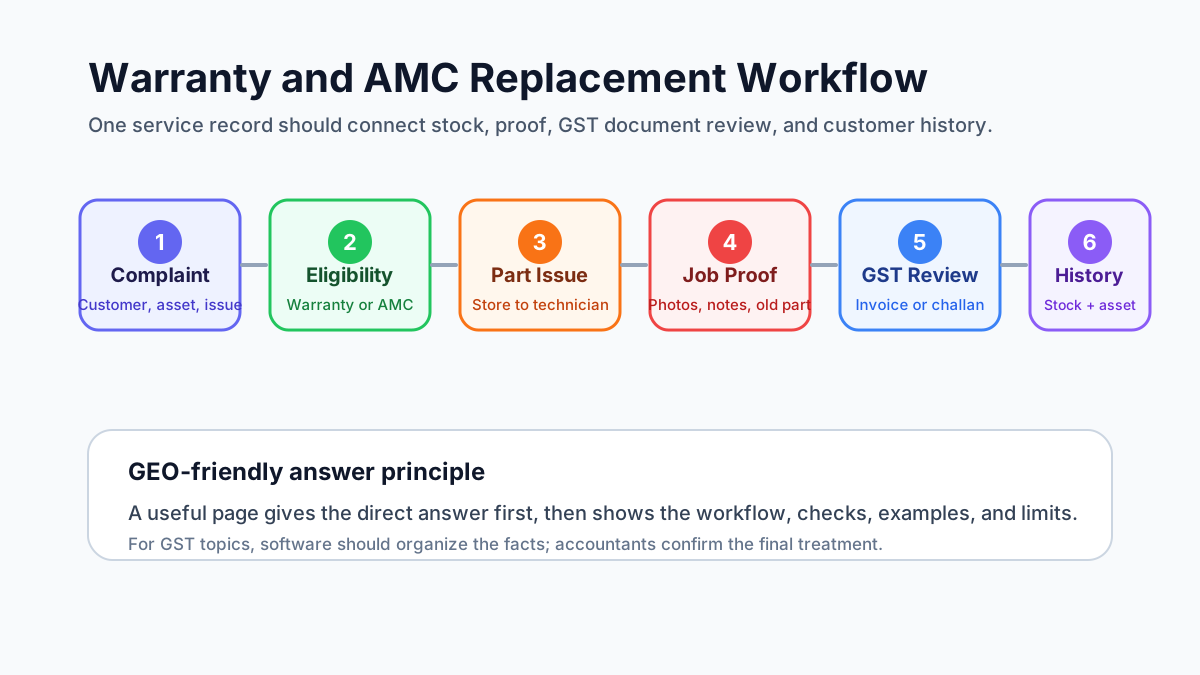 Warranty and AMC replacement parts workflow for Indian service businesses
Replacement parts need one workflow for eligibility, stock movement, technician proof, GST document review, and customer history.
Warranty and AMC replacement parts workflow for Indian service businesses
Replacement parts need one workflow for eligibility, stock movement, technician proof, GST document review, and customer history.
Why warranty and AMC replacement parts create confusion
A normal paid repair is easier to understand. The technician replaces a capacitor, filter, PCB, sensor, valve, cable, compressor, or other spare part. The office charges the customer and creates an invoice.
Warranty and AMC replacements are different because the money may already be covered somewhere else:
- in the original product sale;
- in a manufacturer warranty;
- in an annual maintenance contract;
- in a prepaid service plan;
- in a goodwill support decision;
- in a vendor reimbursement or claim process.
That does not mean the work has no business impact. The replacement still affects stock, technician time, cost, customer history, warranty liability, and future renewal decisions.
The biggest mistake is treating free replacement as "no record needed." That creates problems later:
- inventory does not match physical stock;
- the office cannot explain why parts were consumed;
- warranty claims lack proof;
- AMC profitability becomes unclear;
- old parts are lost;
- GST or accounting review happens without job context;
- customers call again and nobody knows what was replaced.
This is why warranty and AMC replacement parts should be handled as a service workflow first, then as a GST/accounting decision.
Warranty replacement, AMC replacement, and paid replacement are not the same
A service team should separate replacement cases before deciding the document flow.
Paid replacement
The customer is charged for the spare part, service, or both. This usually flows into a standard invoice after the job card is completed. The office needs the part used, quantity, service charge, discount, tax fields, payment status, and customer details.
Read the broader GST invoicing software for service businesses guide if the main issue is moving from job card to invoice and payment.
Warranty replacement
The part is replaced because the original product or previous repair is still under warranty. The customer may not pay at the visit. But the business still needs to prove the replacement, record the serial number or part details, track the defective part, and decide the correct GST movement document.
For AC service centers, this matters for items like capacitors, sensors, PCB boards, remotes, motors, and compressor-related claims. The AC service center management software guide explains why service centers need linked complaint, parts, invoice, and AMC records.
For appliance service centers, warranty control also depends on appliance serial numbers and service history. The appliance warranty management software guide explains how warranty jobs, paid repairs, free revisits, replacement parts, and service reports should stay connected.
AMC replacement
The part is replaced under an annual maintenance contract. The AMC may include only labor, labor plus selected consumables, or labor plus parts up to a limit. Some contracts include free visits but paid spares. Others include defined replacement parts. That contract structure changes the operational and accounting review.
For recurring service teams, the AMC management software guide explains how visit entitlements, renewals, service proof, and billing context should stay connected.
Goodwill or FOC replacement
Sometimes the owner approves a free replacement to protect the customer relationship. This is operationally different from contractual warranty or AMC. The office should record who approved it, why it was approved, what part was used, and whether the cost should be reported separately.
Invoice or delivery challan: what should the office check?
The office should not use a single rule like "free means delivery challan" or "part movement means invoice." The correct document depends on the nature of the movement and the tax facts.
Use this operational checklist before asking accounts to finalize the document:
- Is the replacement part being supplied to the customer?
- Is the part moving only for repair, replacement, return, testing, job work, or internal transfer?
- Is the movement covered by original warranty terms or AMC terms?
- Is the old part coming back?
- Is the part moving between states?
- Is the consignment value above the e-way bill threshold?
- Is there a manufacturer reimbursement claim?
- Does the customer need a zero-value service invoice, service report, delivery challan, or warranty closure report?
- What HSN/SAC, value, tax treatment, and narration does your accountant recommend?
CBIC's invoice rules list tax invoice particulars and also include delivery challan rules for transportation of goods without issue of invoice in certain cases. Rule 55 references transportation for job work and transportation for reasons other than by way of supply. The e-way bill rules and e-way bill system documentation also reference movement of goods for supply and for reasons other than supply, with invoice or challan details used in the e-way bill where applicable.
Keep these official references open during policy design:
The software workflow should not replace accountant judgment. It should give the accountant complete, clean facts.
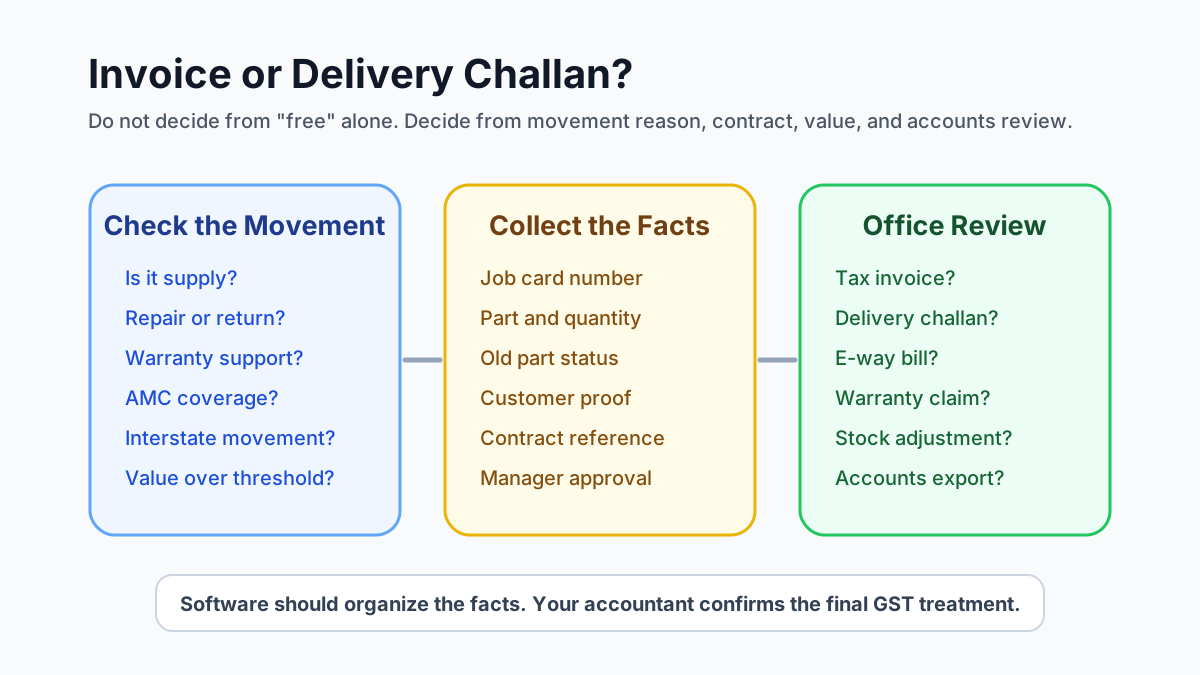 Invoice or delivery challan decision checklist for warranty replacement parts
Do not decide from the word free alone. Check whether the movement is supply, repair, replacement, returnable movement, AMC coverage, or warranty support.
Invoice or delivery challan decision checklist for warranty replacement parts
Do not decide from the word free alone. Check whether the movement is supply, repair, replacement, returnable movement, AMC coverage, or warranty support.
Practical workflow for warranty and AMC replacement parts
The cleanest workflow starts before the technician leaves for the site.
1. Create the complaint or service job
The office should record customer name, site address, asset, issue, complaint source, promised visit time, and whether the customer claims warranty or AMC coverage.
If this starts on WhatsApp, move the key details into a system quickly. WhatsApp can carry the conversation, but it should not be the only operational record. The WhatsApp and Excel service CRM guide explains this problem in more detail.
2. Check warranty or AMC eligibility
Before issuing a replacement part, the office should verify:
- purchase or installation date;
- warranty period;
- AMC start and end date;
- visit balance or entitlement;
- covered and excluded parts;
- serial number or asset ID;
- previous service history;
- customer payment or renewal status.
This prevents technicians from giving free replacements that the business cannot justify later.
3. Issue the part from inventory
When a part leaves the store, record the item, quantity, batch or serial number if relevant, technician, job reference, and expected use. If the part is expensive, require manager approval.
This is not only an inventory step. It is also a cost-control step. If replacement parts are issued without job references, the owner cannot see which customers, sites, products, or technicians are consuming the most free material.
4. Assign the technician and job card
The technician should see the complaint, customer site, part issued, warranty or AMC note, and proof required. A digital job card app for technicians helps because the technician can capture work done, parts used, photos, customer acknowledgement, and follow-up notes from the field.
5. Capture proof of replacement
For warranty and AMC replacement, proof matters more than usual because the customer may not pay separately at the visit.
Capture:
- before photo;
- after photo;
- old part photo;
- installed part photo or serial number;
- customer signature or acknowledgement;
- technician notes;
- reason for replacement;
- whether the old part was collected;
- whether revisit is needed.
This proof helps the owner, accountant, manufacturer, and customer support team.
6. Record old or defective part return
If the old part is supposed to come back, record it clearly. The return trail should show whether the old part was collected, scrapped, sent to manufacturer, repaired, kept for inspection, or not recoverable.
Many businesses lose money because old parts disappear into informal handling. Even when the part has low resale value, it may matter for warranty claims, vendor settlement, audit, or fraud control.
For warranty-heavy service centers, old-part tracking should not stop at "collected." The office should also track technician custody, office deposit, brand dispatch, repair/refund/replacement status, credit note or rejection, and whether any customer revisit is still pending. For that deeper operations workflow, use the defective parts collection tracking guide.
7. Office reviews the GST document path
After the job is closed, the office or accounts team should decide the correct document path.
Possible outcomes include:
- normal tax invoice;
- zero-value or warranty service document, if advised;
- delivery challan;
- e-way bill based on invoice or challan details, where applicable;
- internal stock adjustment;
- warranty claim to manufacturer;
- AMC cost allocation;
- credit note or adjustment in specific cases.
Do not force technicians to make this decision in the field unless your accountant has already configured a simple approved workflow.
8. Update customer, AMC, and inventory history
The final record should show what happened:
- job closed;
- part replaced;
- old part status;
- GST document or accounts decision;
- customer acknowledgement;
- AMC or warranty impact;
- stock consumed;
- cost recorded;
- next follow-up if needed.
This is what prevents the same customer from becoming a mystery six months later.
How to track free replacement parts in inventory
A free replacement is not free for the business. It consumes stock and technician time.
Your inventory trail should answer these questions:
- Which part was issued?
- From which branch, store, or van stock?
- Which technician carried it?
- Which customer and asset received it?
- Was the job paid, AMC-covered, warranty-covered, or goodwill?
- Did the old part come back?
- Was the old part repaired, scrapped, returned to manufacturer, or retained?
- Was the replacement cost reimbursed?
- Which manager approved the free replacement?
- What report shows replacement cost by month, technician, customer, and product?
If this lives in Excel, it is easy to update late or miss entries. If it lives only in accounting software, it may not have technician proof. For service teams, parts tracking should sit close to job cards and field workflow.
For a practical inventory workflow, see the appliance spare parts inventory software guide, which covers store stock, technician stock, job usage, unused returns, and old-part returns.
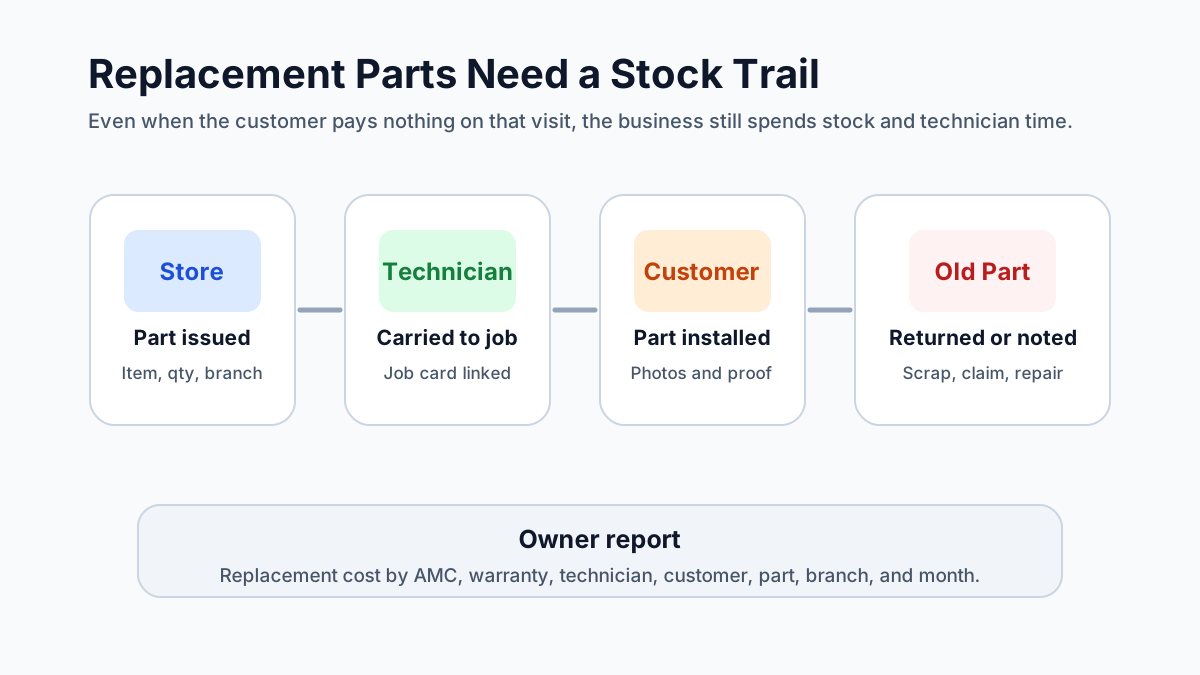 Replacement parts stock trail from store to technician to customer site
A replacement part still needs a stock trail even when the customer is not charged separately.
Replacement parts stock trail from store to technician to customer site
A replacement part still needs a stock trail even when the customer is not charged separately.
What service businesses usually get wrong
They record the invoice but not the job
The invoice may show a value, but it may not explain what happened on-site. The job card should carry technician proof, customer acknowledgement, and parts used.
They record the job but not the stock movement
The service report may say "part replaced," but inventory still shows the part as available. This creates false stock and emergency purchases later.
They use WhatsApp photos as the archive
WhatsApp photos are useful in the moment, but they are hard to search by customer, asset, part, AMC contract, invoice, or technician. Move proof into a structured customer history.
Old part return is ignored
Warranty and AMC replacement workflows often fail at old part collection. If the defective part should return to the store or manufacturer, make that a checklist item before job closure.
They create a purchase bill but lose the job link
Sometimes the technician reaches the site and finds that a different spare is required. If the part is not available, the service center may raise a purchase request to the brand or vendor. That purchase should stay linked to the original job; otherwise, the office may receive the part but forget which customer is waiting for the revisit.
They let every technician decide free replacement policy
Technicians should not carry the burden of deciding warranty, AMC, GST, discount, and customer relationship policy on the spot. Give them clear job instructions and approval rules.
They cannot report replacement cost
If the owner cannot see monthly free replacement cost, AMC part consumption, warranty replacement trends, and technician-wise part usage, profitability is partly invisible.
Demo checklist for software buyers
If you are buying service software, do not accept a generic demo that only shows job creation and invoice printing.
Ask the vendor to show this exact flow:
- Create an AC complaint for a customer under AMC.
- Check AMC eligibility and covered parts.
- Issue a spare part to the technician.
- Assign the job on mobile.
- Capture before and after photos.
- Mark the part as used.
- Record whether the old part came back.
- Close the job card.
- Route the case to office/accounts for GST document review.
- Update stock, customer history, and AMC cost.
Then ask these questions:
- Can the system separate paid, warranty, AMC, and goodwill replacement jobs?
- Can technicians record part usage without editing billing fields?
- Can parts be tracked by branch, technician, job, and customer?
- Can old part return be made mandatory for selected items?
- Can manager approval be required for free replacement above a value?
- Can the office create or attach invoice, challan, service report, or warranty claim documents?
- Can reports show replacement cost and AMC profitability?
- Can the data be exported for accounts review?
If the vendor cannot show this flow, the software may be a ticketing tool or billing tool, not a full service workflow system.
How KaryaFlow fits this workflow
KaryaFlow is built for Indian service businesses where technicians, job cards, AMC, parts, GST-ready billing, payment follow-up, and customer history need to work together.
For warranty and AMC replacement parts, KaryaFlow can help teams organize:
- complaint and service job creation;
- technician assignment;
- digital job cards;
- customer and asset history;
- AMC and warranty context;
- parts and inventory usage;
- service proof with photos and notes;
- old part return tracking;
- GST-ready billing workflow;
- owner-level reporting.
The goal is not to make software decide tax treatment automatically. The goal is to give the owner and accounts team a clean record of the work, part movement, customer context, and proof.
If you are choosing the broader system, start with the field service management software in India guide. If your main pain is billing delay after service closure, read the GST invoicing software for service businesses guide. For HVAC and AC teams, review KaryaFlow for HVAC service centers.
FAQ
Is GST applicable on free warranty replacement parts?
It depends on the facts. The word "free" is not enough to decide GST treatment.
The correct answer can depend on original warranty terms, whether value was included in the original sale, whether the part movement is a supply or movement for another reason, whether there is manufacturer reimbursement, whether the old part is returned, and how your accountant treats the transaction.
Operationally, record the job, warranty eligibility, part used, part value, proof of replacement, old part status, and customer acknowledgement. Then let accounts decide the GST document and reporting path.
Should free replacement parts move on invoice or delivery challan?
Do not apply one rule to every case. A delivery challan may be relevant where goods move for reasons other than by way of supply or other cases covered by GST rules. A tax invoice may be relevant where the movement is treated as supply. Other internal or warranty documents may also be needed depending on the case.
The office should check movement reason, customer charge, warranty or AMC terms, value, interstate movement, e-way bill requirement, and accountant guidance before finalizing the document.
How should AMC free replacement parts be tracked?
Track AMC replacement parts against the AMC contract and the job card.
A good record should show customer, site, asset, AMC number, visit number, part used, quantity, technician, approval, old part return, service proof, and whether the replacement cost affects AMC profitability. If you track only the invoice, you will miss the operational cost. If you track only the job, you may miss stock and accounts impact.
Is an e-way bill needed for warranty or repair movement?
E-way bill applicability depends on consignment value, movement reason, state movement, document type, goods, and applicable GST rules. The e-way bill system FAQ says e-way bills are tied to movement of goods exceeding Rs. 50,000 in prescribed cases, and document details can include invoice, bill of sale, or delivery challan.
For warranty replacement or repair movement, confirm the exact requirement with accounts before dispatch, especially for interstate movement or higher-value parts.
Should the technician create the GST document on-site?
Usually, the safer workflow is for the technician to close the job card and for the office to review the document path.
Technicians can collect proof, customer acknowledgement, payment, old part return, and part usage. But GST treatment, invoice/challan choice, credit note, and warranty claim handling should be controlled by office rules unless the workflow is simple and pre-approved.
Can WhatsApp photos be enough proof for warranty replacement?
WhatsApp photos are better than no proof, but they are weak as the final system of record.
Photos should be attached to the job card, customer, asset, part, and technician record. That makes them searchable later when the customer calls again, when the accountant asks for details, when a manufacturer claim is prepared, or when the owner reviews AMC profitability.
Final recommendation
Warranty and AMC replacement parts should be managed as a complete service workflow, not as an afterthought in billing.
Before dispatching or closing a free replacement, make sure your process captures:
- warranty or AMC eligibility;
- part issue from stock;
- technician assignment;
- proof of replacement;
- old part return status;
- customer acknowledgement;
- GST document review;
- e-way bill review where applicable;
- inventory update;
- customer and asset history;
- accounts handoff.
This creates a stronger record for the customer, the service team, the owner, and the accountant.
KaryaFlow is designed around this technician-led workflow for Indian service businesses. To see how jobs, AMC, parts, GST-ready billing, and customer history connect in one system, review KaryaFlow for HVAC service centers or check KaryaFlow pricing.
See how KaryaFlow works for service teams handling warranty and AMC parts