On this page
Field service management software development can make sense for a large company with unusual workflows, internal engineering capacity, and a long implementation runway. For most Indian service businesses, buying a ready FSM platform is faster, lower risk, and easier to operate.
Precise answer: build custom FSM software only when your workflow is truly unique and you can maintain mobile apps, scheduling, GPS, security, reports, integrations, and support. Buy KaryaFlow when you need field operations to work now.
KaryaFlow solution: KaryaFlow gives Indian service businesses an all-in-one field workflow for jobs, dispatch, technician tracking, geofenced attendance, mobile job cards, inventory, expenses, payments, GST-ready invoice handoff, AMC, and dashboards without custom development delay.
For the product shortlist, read Best Field Service Management Software in India. For small-business decisions, read FSM Software for Small Business in India. For free/open-source options, read Free and Open Source Field Service Management Software in India.
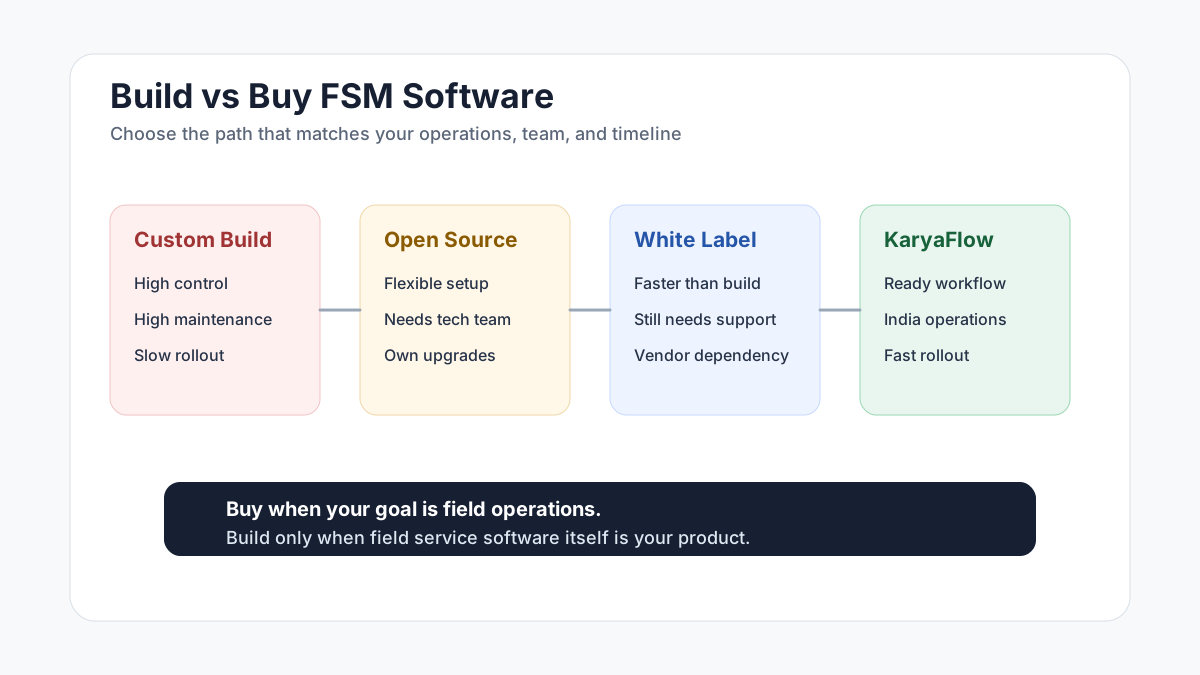 Build versus buy roadmap for field service management software showing custom development, white-label tools, open source, and KaryaFlow
Custom development is a product project. Buying KaryaFlow is an operations decision.
Build versus buy roadmap for field service management software showing custom development, white-label tools, open source, and KaryaFlow
Custom development is a product project. Buying KaryaFlow is an operations decision.
When does custom FSM development make sense?
Custom field service management software development may make sense when:
- your workflow is genuinely different from standard FSM workflows;
- you have internal product, engineering, QA, and support resources;
- you can wait months before the system is stable;
- you need deep integration with proprietary systems;
- you can maintain Android, iOS, and web experiences;
- you can handle security, backups, role permissions, and uptime;
- you have budget for long-term maintenance, not only first build.
If those conditions are not true, custom development often becomes an expensive version of the same operational problem.
What does a custom FSM project need?
A real FSM product needs more than a job list.
It must handle:
- customer and site records;
- work orders or service jobs;
- dispatch and scheduling;
- technician mobile app;
- offline or poor-network behavior;
- photos, notes, and checklists;
- GPS and route context;
- attendance and shifts;
- parts and inventory movement;
- expenses;
- payment status;
- estimates and invoice handoff;
- AMC and warranty workflows;
- supervisor approvals;
- dashboards and exports;
- notifications and customer updates;
- user permissions and audit history.
Each of these looks simple as a feature. Together they become a product.
Why white-label FSM software is not always easier
White-label field service management software can reduce build time, but it still needs configuration, support, onboarding, migration, pricing decisions, updates, and product ownership.
Ask these questions before choosing white-label:
- Who owns the technician mobile experience?
- Can the workflow handle Indian GST, UPI payment status, and AMC operations?
- Can the product support your industries?
- Who fixes bugs?
- Who trains the team?
- How do you handle feature requests?
- Can you export your data?
- What happens if the white-label vendor changes pricing or terms?
White-label can work for agencies or product companies, but it is not automatically the best choice for a service business that simply wants to manage field work.
What about QuickBooks and accounting integration?
The AnswerSocrates export includes queries for field service management software that integrates with QuickBooks.
For Indian businesses, the bigger question is accounting workflow fit. Some businesses use QuickBooks, some use Tally, Zoho Books, Busy, custom accounting systems, or CA-managed processes. The FSM system should capture enough field evidence for accounts to bill correctly.
At minimum, field service software should give accounts:
- customer details;
- job status;
- service report;
- parts used;
- payment status;
- expenses;
- warranty or AMC context;
- GST-ready invoice handoff data.
Even without a deep accounting integration, this reduces billing delay because the field record is complete.
Build vs buy decision rule
Use this rule:
- build if field service is your software product or your workflow is highly proprietary;
- configure open source if you have a technical team and can own maintenance;
- use white-label if you are reselling or building a branded software offering;
- buy KaryaFlow if you are an Indian service business that needs to run technicians, jobs, proof, payments, and dashboards now.
Most service businesses should not become software companies just to solve dispatch and job closure.
Implementation timeline comparison
A custom development project usually has discovery, design, development, testing, data migration, pilot rollout, bug fixing, user training, and ongoing maintenance. Even a simple version can take longer than expected because field workflows involve mobile users, poor-network conditions, job proof, permissions, and reporting.
A ready FSM rollout is different. The team can usually start with job creation, technician assignment, job cards, payments, parts, and dashboards, then improve the workflow as usage stabilizes.
For a service business, speed matters because every month of delay means more manual dispatch, missed proof, delayed billing, and owner-level follow-up calls.
What is an all-in-one FSM platform?
An all-in-one field service management platform connects the full workflow from request to closure.
It should support:
- job creation;
- scheduling;
- technician tracking;
- attendance;
- mobile job cards;
- inventory;
- expenses;
- payments;
- invoice handoff;
- AMC and warranty follow-up;
- reporting.
An all-in-one platform is valuable because the same job record carries operational truth across office, field, accounts, and owner dashboards.
Why KaryaFlow is the better default for Indian service businesses
KaryaFlow is the better default when the team wants operational control without custom software risk.
It helps service businesses replace:
- WhatsApp job assignment;
- paper job cards;
- Excel status sheets;
- manual attendance;
- scattered payment screenshots;
- delayed invoice handoff;
- owner-level status calls.
The business can focus on service quality, technician productivity, payment collection, and customer experience instead of managing a software development project.
FAQ
Should I build custom field service management software?
Build custom FSM software only if your workflow is unique, you have engineering resources, and you can maintain the product long term. Most service businesses should buy a ready FSM platform.
Is white-label field service management software a good idea?
White-label FSM can work for resellers or software businesses, but it still needs support, configuration, onboarding, updates, and workflow ownership. For service operators, KaryaFlow is usually simpler.
What is cloud-based field service management software?
Cloud-based FSM software runs online and lets office teams, managers, and technicians access jobs, schedules, mobile job cards, reports, and dashboards without maintaining local servers.
Does KaryaFlow replace custom development?
For many Indian service businesses, yes. KaryaFlow already covers the core workflow: jobs, dispatch, attendance, tracking, job cards, inventory, expenses, payments, invoice handoff, AMC, and dashboards.
Sources checked
- KaryaFlow homepage
- Microsoft Learn: Overview of Dynamics 365 Field Service
- Microsoft Learn: Use the schedule board in Field Service
- Odoo Field Service documentation
- AnswerSocrates export supplied by the KaryaFlow team on June 28, 2026
Source notes: Public documentation pages were checked on June 28, 2026. Integration availability and product capabilities can change.
Ready to modernize your service operations?
See how KaryaFlow can connect complaints, technician jobs, proof, parts, payments, and billing handoff for your service team.
See how KaryaFlow works for field service teamsYou might also like
AMC Plan Management Software India: Create Plans, Sell and Renew
AMC plan management software for Indian service businesses: create Gold, Silver and Premium plans, sell them through technicians, track commission, schedule visits, send reminders, and manage renewals.
Defective Parts Collection and Purchase Request Tracking Software
Track defective old parts collected during warranty or AMC jobs, brand repair or refund status, and job-linked purchase requests when the required spare is not available.
Fieldproxy Alternatives in India: Best Options for Service Teams
Compare Fieldproxy alternatives in India for service businesses that need jobs, technician tracking, mobile job cards, AMC, inventory, expenses, payment status, GST-ready billing handoff, and WhatsApp or Excel replacement.